
The 7 Cs of Website Design: The Essential Framework for Building High-Converting Websites
The 7 Cs of Website Design: The Essential Framework for Building High-Converting Websites
A high-converting website is rarely an accident; it's the result of intentional design, strategic thinking, and a user-first approach. Whether you run a growing business or a large enterprise, your website acts as your first impression, digital office, and often your primary source of leads and sales.
At Appdid, we’ve spent years building websites and applications for clients across Thane, Mumbai, Nagpur, Pune, Andhra Pradesh, Hyderabad and beyond. Through real-world experience, testing, and data-backed insights, we rely on a proven framework that consistently delivers results: The 7 Cs of Website Design.
This framework ensures every website doesn't just look good but performs well, converts better, and supports long-term business growth.
In this guide, we’ll break down the 7 Cs, offer practical insights, show you how to implement them, and provide a complete website design checklist to apply right away.
Why the 7 Cs Matter in Modern Website Design
Website design has evolved far beyond aesthetics. Today, users expect websites to be fast, intuitive, responsive, and aligned to their goals. Search engines, too, reward clear structure, excellent UX, accessibility, and strong design systems.
The 7 Cs of Website Design offer a complete, strategic framework to ensure your site meets user expectations, business goals, and technical standards.
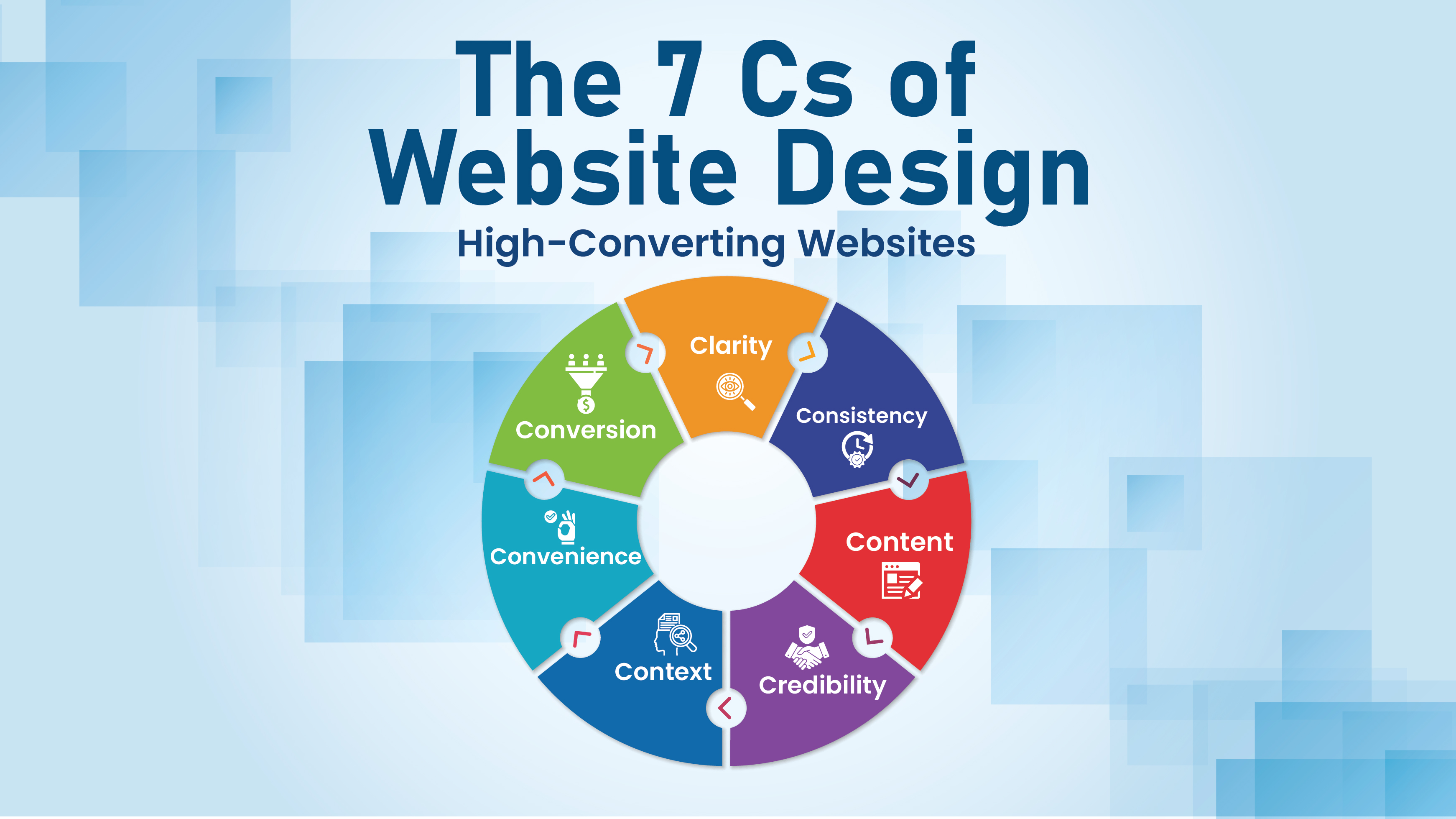
The 7 Cs include:
-
Clarity
-
Consistency
-
Content
-
Credibility
-
Context
-
Convenience
-
Conversion
Let’s break each down with real, actionable insights.
C1 — Clarity: The Foundation of High-Converting UI/UX
Clarity means your website should instantly communicate
-
Who you are
-
What you offer
-
Why it matters
In UI/UX terms, clarity reduces friction and prevents confusion. Users should never have to “figure out” what your website means.
How to achieve clarity:
-
Use simple, readable typography
-
Choose clear navigation labels (no jargon)
-
Keep copy concise and benefit-driven
-
Use visuals that support—not confuse—your message
-
Ensure your homepage answers key questions within 5 seconds
Example:
At Appdid, when designing websites for clients in Thane and Mumbai, we always begin with a 5-second clarity test. If a new visitor cannot understand the business purpose within 5 seconds, the design is not ready.
C2 — Consistency: Build Trust Through Predictable Design
Consistency is crucial for a trustworthy brand experience. Everything from buttons to page layouts should feel unified.
Elements requiring consistency:
-
Font family and sizes
-
Brand colors
-
Button styles
-
Iconography
-
Tone of voice
-
Spacing and alignment
-
Page layout structure
Why consistency matters:
A predictable interface reduces cognitive load. Users feel “safe” because the design behaves the way they expect.
C3 — Content: Engaging, Informative, and Converting
Even the most beautiful website fails without strong content.
Content must be:
-
Relevant
-
Helpful
-
Optimized for SEO
-
Aligned with search intent
Types of essential content:
-
Clear product/service descriptions
-
High-quality images and videos
-
FAQs
-
Case studies or portfolio
-
Blogs and resources
-
CTA-driven messaging
Search engines reward high-quality content, but more importantly your customers rely on it to make decisions.
C4 — Credibility: Building Trust With Every Interaction
Credibility ensures users feel confident in choosing your business.
Ways to build trust:
-
Showcase authentic testimonials
-
Add certifications or awards
-
Include team photos
-
Highlight years of experience
-
Showcase client logos
-
Display real case studies
As a professional Website Design company in Mumbai, Appdid integrates trust elements early in the design. This reduces hesitation and strengthens conversions.
C5 — Context: Delivering the Right Experience at the Right Time
Context means designing for real user behavior.
Examples of contextual design:
-
Mobile users get simplified layouts
-
First-time visitors get explanations
-
Returning visitors see fast paths to services
-
Location-based content for local businesses
Understanding context requires UX research, user journeys, analytics, and empathy.
C6 — Convenience: Reduce Effort, Increase Conversions
Users choose convenience over complexity.
Ways to increase convenience:
-
Fast load speed
-
One-click actions
-
Clear and short forms
-
Easy navigation
-
Search bar
-
Sticky CTAs
-
Simple service flow
Convenience directly impacts bounce rate, engagement, and conversions.
C7 — Conversion: Designing for Tangible Results
The final C—Conversion—is your website’s true purpose.
What drives conversions:
-
Strategic CTAs
-
Clean layouts
-
Clear value propositions
-
Trust signals
-
Mobile-first design
-
Speed optimization
-
Smooth checkout or inquiry flow
Every page should lead visitors one step closer to action calling you, booking a service, or submitting an inquiry.
Website Designers in Thane, Mumbai — Why Local Expertise Matters
While digital allows you to work globally, local knowledge still makes a difference especially in UI/UX and branding.
Local website designers understand:
-
Regional competition
-
Local audience behavior
-
Market expectations
-
Cultural nuances
-
Local SEO
Appdid has served businesses across Thane, Mumbai, and nearby cities, helping them build websites that genuinely connect with local audiences and drive leads.
Web Design Checklist — A Practical Guide for Business Owners
Use this checklist to evaluate your current website or guide your redesign:
UI/UX Essentials
-
Clean and simple layout
-
Consistent branding
-
Mobile-first design
-
Fast loading pages
-
Intuitive navigation
Content & SEO
-
Clear messaging
-
Keyword-optimized pages
-
Engaging visuals
-
FAQs & helpful resources
Trust & Credibility
-
Testimonials
-
Case studies
-
Real photos
-
Social proof
Technical
-
SSL security
-
SEO-friendly URL structure
-
Schema markup
-
Fast hosting
Conversion
-
Strong CTAs
-
Easy forms
-
Contact options visible
-
Lead magnets or offers
UI/UX Design Fundamentals Every Business Should Know
UI = visual layout
UX = user experience
Mastering both improves how users interact with your site.
Key fundamentals:
-
Hierarchy (what users see first)
-
Spacing and alignment
-
Color psychology
-
Interaction design
-
Accessibility (WCAG)
-
Responsiveness
These fundamentals directly support the 7 Cs framework.
Website Layout Best Practices That Improve Engagement
Layout plays a major role in how users read, browse, and respond to your website.
Industry-backed best practices:
-
Use F-shaped or Z-shaped layout patterns
-
Keep important content above the fold
-
Limit menu items (5–7 max)
-
Use white space generously
-
Keep paragraphs short
-
Use visual cues to guide user focus
A great layout isn’t complicated, it's intentional.
Why Partner With a Website Design Company in Mumbai Like Appdid
Choosing the right partner can make or break your digital strategy.
What Appdid offers:
-
User-focused design
-
Custom web & app development
-
Conversion-optimized strategy
-
SEO-ready structure
-
Fast turnaround
-
End-to-end digital experience
With operations across Thane, Mumbai, Nagpur, Pune, Andhra Pradesh, Hyderabad, Appdid supports businesses at every stage of digital transformation. Contact us today!
Contact Us:
FAQs
1. What are the 7 Cs of website design?
Clarity, Consistency, Content, Credibility, Context, Convenience, and Conversion together they create a high-performing website.
2. Are the 7 Cs useful for small businesses?
Yes. They help small businesses create efficient, cost-effective websites that convert.
3. Do these principles help SEO?
Absolutely. Search engines reward clarity, speed, structure, and great content all part of the 7 Cs.
4. How long does website development take?
Usually 2–6 weeks depending on content, design complexity, and features.
5. Does Appdid provide UI/UX design services?
Yes. Appdid specializes in UI/UX, web development, and app development across multiple cities.