



The Ultimate Guide to On-Demand App Development: Features, Types, and Examples
In today's fast-paced digital economy, convenience is no longer a luxury, it's an expectation. Customers want services delivered instantly, seamlessly, and at their fingertips. This growing demand has fueled the rapid rise of on-demand app development, transforming how businesses operate and how consumers interact with services.
From booking a cab to ordering groceries or hiring professionals, on-demand applications have become an integral part of everyday life. This in-depth guide will help you understand what on-demand apps are, their types, essential features, real-world examples, and how businesses can leverage them for sustainable growth.
What Is On-Demand App Development?
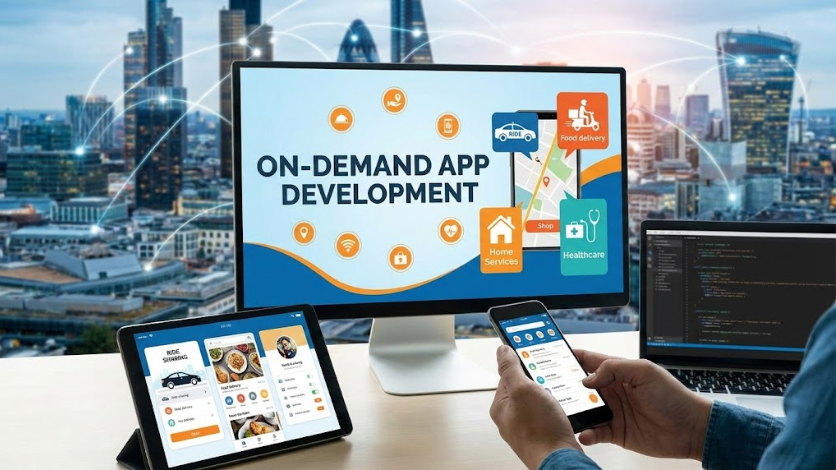
On-demand app development refers to the process of building mobile or web applications that connect users with service providers in real time. These apps act as digital marketplaces, enabling instant booking, tracking, communication, and payments all within a single platform.
Unlike traditional business models, on-demand apps eliminate delays, reduce operational friction, and enhance customer satisfaction by offering immediate access to services.
Why On-Demand Apps Are Dominating the Market
The popularity of on-demand applications is driven by several factors:
-
Smartphone penetration across urban and semi-urban regions
-
Changing consumer behavior favoring speed and convenience
-
Digital payment adoption
-
Scalability for businesses
-
Data-driven personalization
Industries ranging from food, healthcare, logistics, education, and home services have adopted this model to stay competitive.
Types of On-Demand Apps
Understanding the different types of on-demand apps is crucial before starting development. Each category serves a specific audience and business objective.
1. On-Demand Service Apps
These apps connect users with skilled professionals.
Examples:
-
Urban Company (home services)
-
Practo (healthcare consultations)
-
Housejoy (repair & maintenance)
2. On-Demand Delivery Apps
Focused on delivering goods from vendors to customers.
Examples:
-
Grocery delivery apps
-
Courier and logistics platforms
-
Pharmacy delivery solutions
3. On-Demand Transportation Apps
These apps provide instant transportation services.
Examples:
-
Uber
-
Ola
-
Rapido
4. On-Demand Food & Beverage Apps
Restaurants and cloud kitchens rely heavily on this category. A well-planned on-demand food delivery app development strategy ensures faster order processing, real-time tracking, and customer retention.
5. On-Demand Rental Apps
Users can rent products or spaces temporarily.
Examples:
-
Car rental apps
-
Bike rental platforms
-
Equipment rental apps
Examples of On-Demand Apps That Changed Industries
Studying successful platforms offers valuable insights into scalability and user experience
-
Uber: Revolutionized transportation with real-time GPS tracking and dynamic pricing
-
Zomato: Simplified food discovery, ordering, and delivery
-
Swiggy: Built a hyperlocal delivery ecosystem
-
Dunzo: Enabled multi-purpose delivery services
-
Urban Company: Standardized home services with verified professionals
These platforms succeeded by focusing on user convenience, reliability, and performance.
Core Features of an On-Demand Application
A robust on-demand app typically includes three panels: User, Service Provider, and Admin. Below are the essential features that make an app successful.
User Panel Features
-
Easy sign-up & login (email, phone, social login)
-
Service search & filters
-
Real-time availability
-
In-app chat or call
-
Live tracking
-
Secure payment gateway
-
Ratings & reviews
-
Order history
Service Provider Panel Features
-
Profile management
-
Service acceptance/rejection
-
Availability toggle
-
Earnings dashboard
-
Route navigation
-
Customer communication
-
Performance analytics
Admin Panel Features
-
User & provider management
-
Commission settings
-
Payment monitoring
-
Analytics & reports
-
Dispute resolution
-
Push notifications
-
CMS & promotions
Advanced Features That Add Competitive Advantage
To stand out in a crowded market, modern on-demand apps integrate advanced technologies:
-
AI-powered recommendations
-
Dynamic pricing algorithms
-
Real-time analytics dashboards
-
Multi-language support
-
Geo-fencing & location intelligence
-
Subscription & loyalty programs
-
Cloud-based scalability
Technology Stack for On-Demand App Development
Choosing the right technology stack ensures performance, security, and scalability.
Frontend:
-
React Native / Flutter (cross-platform)
-
Swift (iOS)
-
Kotlin (Android)
Backend:
-
Node.js
-
Python (Django)
-
Laravel
Database:
-
MongoDB
-
PostgreSQL
-
MySQL
Integrations:
-
Google Maps API
-
Payment gateways (Razorpay, Stripe, Paytm)
-
Cloud services (AWS, Google Cloud)
Business Benefits of On-Demand Apps
On-demand applications are not just tech products, they are growth engines.
-
Higher customer retention
-
Operational automation
-
Faster service delivery
-
Real-time data insights
-
Scalable revenue models
-
Reduced manual errors
They empower startups and enterprises alike to expand into new markets with minimal infrastructure.
Monetization Models for On-Demand Apps
A sustainable revenue model is key to long-term success.
-
Commission-based model
-
Subscription plans
-
Surge pricing
-
Featured listings
-
In-app advertisements
-
Freemium upgrades
The choice of monetization depends on your target audience and industry niche.
Challenges in On-Demand App Development
Despite the advantages, businesses must address certain challenges:
-
Managing real-time supply and demand
-
Ensuring data security
-
Maintaining service quality
-
Handling scalability during peak hours
-
Regulatory compliance
Partnering with an experienced development company helps mitigate these risks effectively.
Future Trends in On-Demand Applications
The on-demand economy continues to evolve with emerging trends such as:
-
AI-driven automation
-
Voice-based app interactions
-
Super apps offering multiple services
-
Hyperlocal personalization
-
Blockchain-based secure payments
Businesses that adapt early gain a strong competitive edge.
Frequently Asked Questions (FAQ)
Q1. What industries benefit most from on-demand app development?
Industries like food delivery, healthcare, logistics, transportation, home services, and retail benefit the most due to high consumer demand for instant services.
Q2. How long does it take to develop an on-demand app?
Development time typically ranges from 3 to 6 months, depending on features, complexity, and platform requirements.
Q3. Is it better to build a native or cross-platform on-demand app?
Cross-platform apps are cost-effective and faster to launch, while native apps offer better performance for complex use cases.
Q4. How much does on-demand app development cost in India?
Costs vary based on features and scale, but generally range from ₹5 lakhs to ₹20+ lakhs for enterprise-grade solutions.
Q5. Can on-demand apps scale as my business grows?
Yes, when built with cloud infrastructure and modular architecture, on-demand apps are highly scalable.
Why Choose Appdid – App Development Company in Mumbai
If you’re planning to build a powerful, scalable, and future-ready on-demand application, Appdid is your trusted technology partner.
About Appdid
Appdid is a leading App Development Company in Thane, Mumbai, delivering innovative mobile and web solutions tailored to business needs. With a team of expert developers, designers, and strategists, Appdid specializes in building high-performance on-demand apps across industries.
Our Service Locations
We proudly serve businesses across:
-
Navi Mumbai
-
And many more locations across India
Why Appdid?
-
End-to-end app development
-
Custom UI/UX design
-
Scalable architecture
-
Post-launch support & maintenance
-
Proven industry expertise
📞 Contact Number: +91 7066600093
Whether you’re a startup or an established enterprise, Appdid helps turn your on-demand app idea into a successful digital product that drives growth and customer satisfaction. Contact us today!