
What Is Headless CMS? Benefits, Use Cases and Architecture
What Is Headless CMS? Benefits, Use Cases and Architecture
As businesses expand across websites, mobile applications, eCommerce platforms, and digital products, managing content efficiently becomes a challenge. This is where a Headless CMS comes into the picture.
At Appdid, we often recommend a headless CMS architecture for businesses that need to deliver content across multiple platforms while maintaining flexibility and scalability. Whether you're building a website, mobile app, or enterprise platform, understanding how a headless CMS works can help you choose the right content management approach.
Businesses building content-driven websites, mobile apps, and enterprise platforms increasingly adopt headless CMS architecture to improve scalability and omnichannel content delivery. Organizations working with an experienced mobile app development company in Mumbai often choose headless solutions to future-proof their digital products.
What Is a Headless CMS?
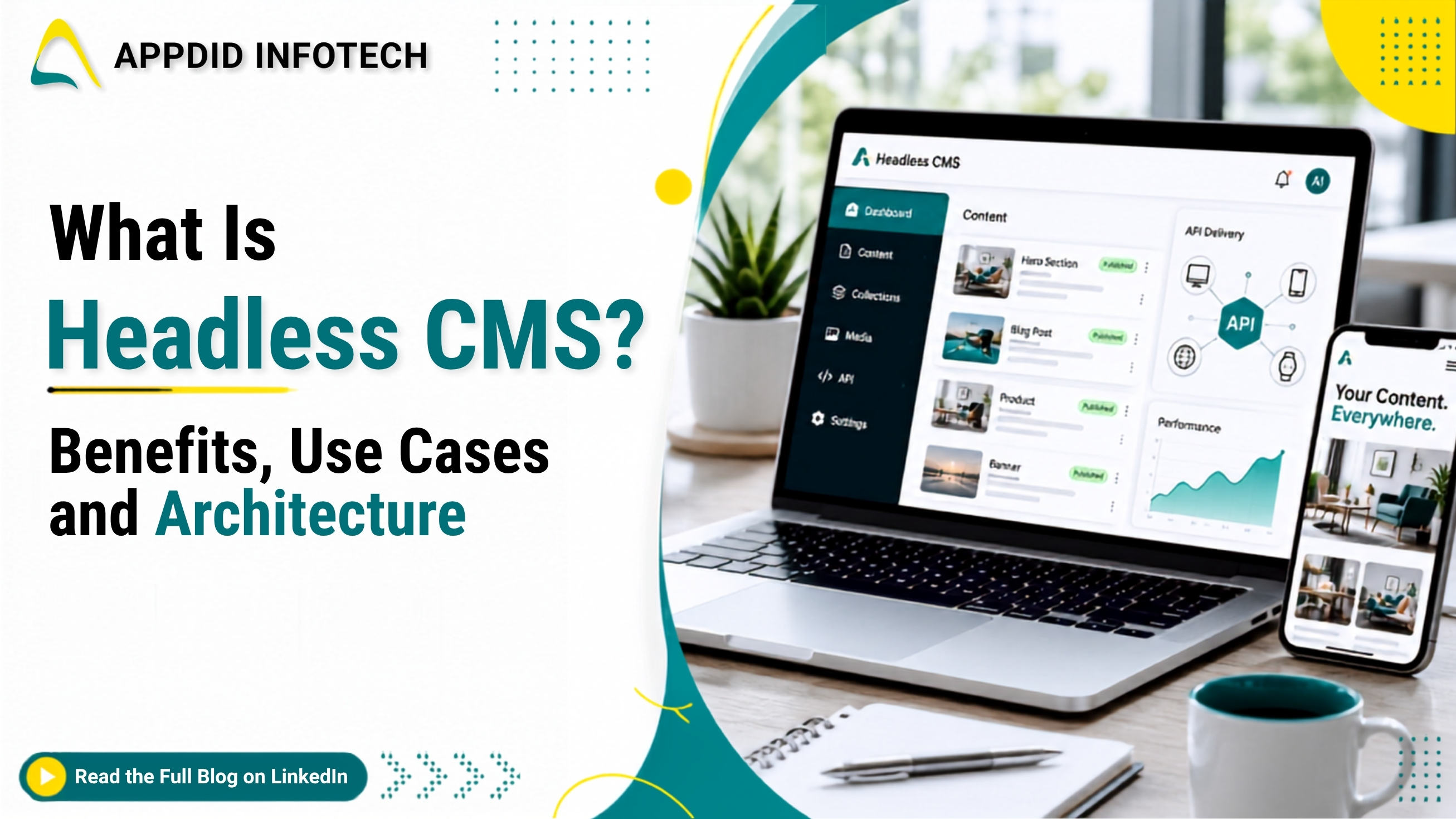
A headless CMS is a content management system where the content repository (backend) is separated from the presentation layer (frontend).
Unlike traditional CMS platforms where content and website design are tightly connected, a headless CMS stores content centrally and delivers it through APIs.
This means the same content can be displayed on:
-
Websites
-
Android apps
-
iOS apps
-
Smart TVs
-
Wearable devices
-
Digital kiosks
For businesses investing in modern digital products, a headless CMS offers significantly more flexibility than traditional content management systems.
How Does a Headless CMS Work?
A headless CMS consists of three primary components:
Content Repository
This is where content is created and managed.
Examples include:
-
Blog posts
-
Product descriptions
-
Images
-
Videos
-
Landing page content
API Layer
The content is delivered through APIs such as REST or GraphQL.
This allows developers to pull content into any frontend application without being tied to a specific website framework.
Businesses building custom platforms often combine headless CMS solutions with scalable backend architectures similar to those discussed in our guide on Mobile Backend as a Service.
Frontend Layer
Developers can use any technology to display content, including:
-
React
-
Flutter
-
Angular
-
Vue.js
-
Native mobile applications
This separation gives development teams complete control over the user experience.
Benefits of Headless CMS
1. Omnichannel Content Delivery
One of the biggest benefits of a headless CMS is the ability to manage content once and publish it everywhere.
The same content can be displayed across:
-
Websites
-
Mobile applications
-
Customer portals
-
Smart devices
This saves time while maintaining consistency across channels.
2. Better Performance
Since content is delivered via APIs, applications can retrieve only the data they need.
Benefits include:
-
Faster loading times
-
Improved mobile performance
-
Better user experience
-
Enhanced scalability
This is particularly important for businesses investing in mobile app development in Mumbai, where application speed directly impacts user engagement.
3. Greater Developer Flexibility
Traditional CMS platforms often limit frontend customization.
With a headless CMS, developers can use modern technologies and frameworks without CMS restrictions.
This flexibility makes it easier to build custom applications tailored to business requirements.
Modern frontend frameworks and API-driven architecture make headless CMS an excellent choice for businesses developing advanced mobile applications. This approach is commonly used in projects involving iOS app development in Mumbai where performance and flexibility are critical.
4. Future-Proof Architecture
As new devices and digital channels emerge, businesses can continue using the same content repository while expanding to additional platforms.
This makes a headless CMS a future-ready solution for growing organizations.
Headless CMS Architecture Explained
A typical headless CMS architecture includes:
Content Management Layer
Stores all structured content within a centralized system.
API Layer
Acts as a bridge between content and applications.
Many businesses choose between REST APIs and GraphQL APIs depending on their project requirements. If you're evaluating these options, explore our guide on REST API vs GraphQL.
Presentation Layer
This layer displays content through:
-
Websites
-
Mobile apps
-
Enterprise portals
-
Progressive Web Apps
Because the frontend is completely independent, businesses can create highly customized digital experiences.
Common Use Cases of Headless CMS
Mobile Applications
Many modern mobile applications rely on a headless CMS to manage content dynamically without requiring app updates for every content change.
Businesses developing Android applications can benefit from our Android App Development Services, where flexible content management plays a crucial role in app scalability.
iOS Applications
A headless CMS enables content updates across iPhone and iPad applications from a centralized dashboard.
Learn more about our iOS App Development Services.
Enterprise Platforms
Large organizations use headless CMS solutions to manage content across multiple departments, websites, and customer-facing platforms.
Organizations implementing enterprise software often combine headless CMS architecture with custom business platforms and customer management systems. For example, businesses adopting CRM software development in Mumbai can benefit from centralized content management and API-driven integrations.
eCommerce Platforms
Online stores often use headless CMS systems to manage:
-
Product catalogs
-
Marketing campaigns
-
Promotional content
-
Landing pages
This improves content consistency across web and mobile experiences.
Headless CMS solutions are increasingly used in modern eCommerce ecosystems because they allow businesses to manage product content across websites, mobile apps, and multiple customer touchpoints. This is especially valuable for businesses investing in eCommerce food delivery app development.
Headless CMS vs Traditional CMS
|
Feature |
Traditional CMS |
Headless CMS |
|
Frontend Flexibility |
Limited |
High |
|
Mobile App Support |
Moderate |
Excellent |
|
API Integration |
Limited |
Strong |
|
Omnichannel Delivery |
Limited |
Excellent |
|
Scalability |
Moderate |
High |
|
Developer Freedom |
Limited |
Complete |
For businesses planning custom applications, a headless CMS often provides better long-term flexibility.
Is Headless CMS Right for Your Business?
A headless CMS is worth considering if:
-
You manage content across multiple platforms
-
You operate both websites and mobile applications
-
You require scalable architecture
-
You want faster content delivery
-
You need greater frontend flexibility
Businesses building digital products for Mumbai, Pune, and other growing markets increasingly adopt headless architecture to support future growth and expansion.
Conclusion
A headless CMS separates content management from presentation, allowing businesses to deliver content efficiently across websites, mobile apps, and digital platforms.
Its flexibility, scalability, and omnichannel capabilities make it an ideal choice for organizations building modern digital experiences. As mobile applications and web technologies continue to evolve, headless CMS architecture is becoming a preferred solution for businesses seeking long-term growth and adaptability.
Frequently Asked Questions
What is a headless CMS?
A headless CMS is a content management system that separates content storage from the frontend presentation layer and delivers content through APIs.
What are the benefits of a headless CMS?
Benefits include faster performance, omnichannel content delivery, greater flexibility, scalability, and support for modern application development.
Is a headless CMS better than a traditional CMS?
For businesses managing content across multiple platforms, a headless CMS often provides greater flexibility and scalability than traditional CMS solutions.
Which businesses should use a headless CMS?
Businesses with websites, mobile applications, eCommerce platforms, and enterprise systems can benefit significantly from headless CMS architecture.
Appdid – Expert Mobile App Development Company
Appdid is an expert mobile app development company helping businesses across Mumbai, Pune, Nagpur, Hyderabad, and India build scalable digital products using modern technologies and future-ready architectures.
Our team develops mobile applications, enterprise platforms, eCommerce solutions, and content-driven systems powered by Headless CMS, cloud infrastructure, APIs, and AI-powered technologies. We help businesses create flexible digital ecosystems that deliver seamless experiences across web and mobile platforms.
Ready to Build a Scalable Digital Platform?
Whether you're planning a mobile application, content-driven website, enterprise solution, or next-generation digital product, Appdid can help bring your vision to life.
-
Explore Headless CMS solutions
-
Build scalable Android and iOS applications
-
Develop future-ready digital platforms
-
Launch faster with modern technologies
Learn more about our mobile app development services, explore our mobile app development company in Pune, or discover our approach to custom app development.