
Urgent Care App Development Guide | Appdid
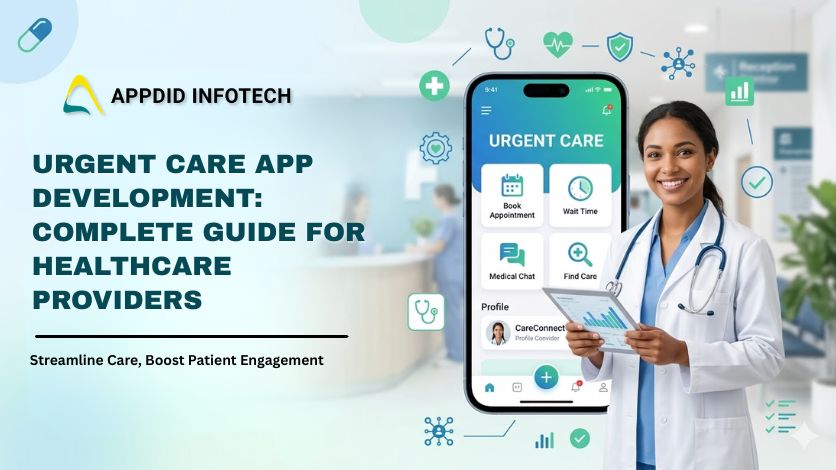
Urgent Care App Development: Complete Guide for Healthcare Providers
Quick Summary:
Urgent care app development helps healthcare providers offer instant medical services, streamline patient management, and improve accessibility. By integrating features like online appointment booking, telemedicine consultations, secure patient records, and automated notifications, healthcare providers can enhance the overall patient experience. Learn how to build an efficient urgent care app that boosts patient engagement, optimizes clinic operations, and drives practice growth.
Introduction: Why Urgent Care App Development Matters
In today’s fast-paced world, patients demand convenient and immediate healthcare solutions. This is where urgent care app development comes into play. By digitizing urgent care services, healthcare providers can ensure timely patient care, reduce wait times, and increase operational efficiency. With mobile health apps gaining popularity, urgent care providers can now reach patients beyond clinic walls, offering appointment booking, teleconsultation, and instant notifications for medical updates.
Developing an urgent care app is not just about technology, it's about enhancing patient experience, improving service quality, and growing your healthcare business.
Who Uses Urgent Care App?
Urgent care apps are designed for a wide range of users, making healthcare more accessible and convenient for everyone. Understanding the key user groups helps in designing features that meet their specific needs.
1. Patients Seeking Immediate Care
Patients with minor injuries, sudden illnesses, or health concerns use urgent care apps to book appointments quickly without waiting in long queues. Features like symptom checkers and teleconsultations make it easy for them to get timely medical advice.
2. Busy Professionals and Families
People with hectic schedules rely on urgent care apps to manage appointments, reminders, and follow-ups on the go. Families can also use the app to track their children’s or elderly members’ health records and book consultations when needed.
3. Healthcare Providers and Clinic Staff
Doctors, nurses, and administrative staff use the app to manage appointments, access patient records, conduct telemedicine sessions, and monitor analytics. This streamlines clinic operations and improves workflow efficiency.
4. Chronic Care and Remote Monitoring Patients
Patients managing chronic conditions or those requiring continuous monitoring benefit from apps integrated with wearable devices. They can track vital signs, receive alerts, and communicate with healthcare providers without frequent clinic visits.
5. Healthcare Administrators and Managers
Clinic managers and administrators use urgent care apps to analyze patient flow, monitor staff performance, track billing, and generate reports. Data-driven insights help in optimizing resources and improving patient satisfaction.
Key Features of an Effective Urgent Care App
A successful urgent care app should focus on both patient and provider needs. Some essential features include:
1. Patient Registration & Profile Management
Patients should be able to create accounts, upload medical history, and manage insurance details effortlessly. This ensures faster check-ins and personalized care.
2. Appointment Booking & Scheduling
Allow patients to book appointments in real-time, view available slots, and receive instant confirmations. Integration with calendar systems enhances workflow efficiency.
3. Telemedicine & Virtual Consultations
Offering video consultations allows patients to connect with doctors remotely, especially for minor injuries or follow-ups. Telehealth integration is a key component in modern urgent care apps.
4. Push Notifications & Alerts
Automated reminders for appointments, prescription refills, and health tips improve patient engagement and adherence to treatment.
5. Payment Gateway & Billing
Secure and seamless in-app payments reduce administrative hassles. Integration with insurance providers can simplify claims and reduce delays.
6. Emergency Services & GPS Integration
Provide patients with immediate access to emergency contacts, nearest clinics, or hospitals through GPS-enabled features.
7. Analytics & Reports for Providers
Healthcare providers can track patient visits, app usage, and treatment outcomes, enabling data-driven decisions and improved service delivery.
Steps to Develop an Urgent Care App
Building an urgent care app requires a strategic approach combining healthcare expertise and technology. Here’s a step-by-step guide:
1. Market Research & Target Audience Analysis
Understanding your patients’ needs is crucial. Analyze the demographics, preferred platforms, and services most requested by patients.
2. Define Features & Functionalities
Prioritize features based on user requirements. Keep the interface intuitive to enhance patient adoption.
3. Choose the Right Technology Stack
Select robust frameworks for mobile app development (iOS & Android) and backend solutions that ensure security, scalability, and seamless performance.
4. Design a User-Friendly UI/UX
A simple, clean, and intuitive design is critical. The app should allow patients to book appointments, consult doctors, and access medical records effortlessly.
5. Compliance & Security
Ensure the app adheres to healthcare regulations like HIPAA (for the U.S.) or GDPR (for the EU) to protect patient data and maintain trust.
6. Testing & Quality Assurance
Thorough testing is crucial to identify bugs, ensure smooth functionality, and guarantee a positive user experience.
7. Launch & Marketing
Promote the app through social media, healthcare blogs, and in-clinic campaigns. Highlight its benefits to patients and providers alike.
Benefits of Urgent Care App Development
For Patients:
-
Convenience & Accessibility: Schedule appointments or consult doctors anytime, anywhere.
-
Reduced Waiting Time: Instant access to healthcare providers without long queues.
-
Personalized Care: Access to medical records, prescription updates, and health reminders.
For Healthcare Providers:
-
Operational Efficiency: Automated scheduling, billing, and patient management.
-
Data-Driven Insights: Analytics help improve care quality and optimize resources.
-
Increased Revenue: More appointments, teleconsultations, and patient retention.
Latest Trends in Healthcare App Development (2026)
As healthcare continues to embrace digital transformation, urgent care app development in 2026 is shaped by cutting‑edge trends that elevate patient experience and operational efficiency. Whether you are a provider or a healthcare tech leader, staying informed about these trends ensures your solutions remain competitive and future‑ready.
1. AI‑Powered Diagnostics and Decision Support
Artificial Intelligence (AI) is revolutionizing healthcare apps by offering smart diagnostic support and symptom triage tools. In urgent care apps, AI can help patients assess symptoms before booking appointments and assist clinicians with early insights — reducing misdiagnoses and improving care quality.
2. Telehealth Evolution with AR/VR Integration
Telemedicine has become standard, but in 2026, AR (Augmented Reality) and VR (Virtual Reality) are enhancing virtual care experiences. Providers can offer interactive follow‑ups, remote wound assessments, and guided physical therapy sessions through immersive interfaces — a major leap forward in urgent care app functionality.
3. Predictive Analytics for Personalized Care
Healthcare apps are increasingly using predictive analytics to forecast patient needs, readmission risks, and medication adherence. This data‑driven approach allows urgent care apps to deliver tailored recommendations, improving outcomes and patient satisfaction.
4. Blockchain for Enhanced Security
With growing privacy concerns, blockchain technology is gaining traction in healthcare applications. It provides decentralized, tamper‑proof data storage — safeguarding patient records, streamlining secure sharing, and building trust in urgent care platforms.
5. Voice‑Enabled Interfaces & Conversational AI
Voice search and conversational assistants are becoming essential app features, especially for patient engagement. Patients can schedule appointments, receive medication reminders, and ask health questions hands‑free — boosting accessibility and convenience.
6. Wearable Integration and Remote Monitoring
The rise of wearables and health tracking devices continues to influence mobile healthcare solutions. Urgent care apps now sync with patient wearable data (like heart rate, oxygen levels, glucose monitoring), enabling real‑time insights for clinicians and proactive care.
7. Advanced Interoperability Across Health Systems
Future‑ready urgent care apps increasingly support seamless interoperability with EHRs, lab systems, and pharmacy networks. Standardized data exchange protocols like FHIR help providers create unified patient records, reducing errors and improving care coordination.
8. Micro‑Service & Modular App Architecture
To enhance scalability and ease updates, app developers are adopting micro‑service architectures. This approach allows urgent care app features (booking, consulting, billing, analytics) to operate independently making development faster and more flexible.
Common Challenges & Solutions
While developing an urgent care app, providers may face challenges such as:
-
Data Security Concerns:
Solution: Use end-to-end encryption, secure servers, and comply with healthcare regulations. -
User Adoption:
Solution: Offer easy onboarding, tutorials, and in-app support to encourage usage. -
Integration with Existing Systems:
Solution: Choose scalable APIs that connect with EMR/EHR systems seamlessly.
Best Practices for Urgent Care App Development
Building an urgent care app is not just about technology—it’s about providing a seamless, secure, and patient-friendly experience. Here are some best practices healthcare providers should follow:
1. Prioritize User-Friendly Design
Ensure the app has a clean, intuitive interface. Patients should be able to book appointments, access medical records, and consult doctors without confusion. Simplicity drives adoption.
2. Ensure Compliance & Data Security
Protecting patient data is critical. Follow HIPAA (U.S.) or GDPR (EU) standards, use end-to-end encryption, and secure cloud storage to maintain trust and regulatory compliance.
3. Incorporate Telemedicine Features
Provide virtual consultations to expand access, reduce clinic congestion, and meet patient expectations for remote care. Integrating video calls, chat, and e-prescriptions is highly recommended.
4. Optimize App Performance
Fast loading times, minimal crashes, and smooth navigation enhance the user experience. Regular updates and bug fixes keep the app reliable and trustworthy.
5. Integrate with Existing Systems
Seamless integration with EMR/EHR, billing software, and other hospital systems improves operational efficiency, ensures accurate records, and reduces manual errors.
6. Leverage Analytics for Continuous Improvement
Monitor patient engagement, appointment trends, and feature usage. Analytics help identify gaps, optimize services, and improve overall patient satisfaction.
7. Provide Personalized Patient Engagement
Use push notifications, health tips, appointment reminders, and prescription alerts to keep patients involved in their care. Personalized experiences increase retention and loyalty.
Cost Affecting Factors in Urgent Care App Development
The cost of developing an urgent care app can vary widely depending on multiple factors. Understanding these variables helps healthcare providers plan their budget effectively and ensures they get the best ROI from their investment.
1. App Complexity and Features
The number and sophistication of features significantly affect cost. A basic app with appointment booking and patient registration will be cheaper, while advanced functionalities like telemedicine, AI diagnostics, wearable integration, and predictive analytics will increase development costs.
2. Platform Selection
Developing for iOS, Android, or both impacts pricing. Cross-platform development can save time and cost, but native apps often provide better performance and user experience.
3. Design and User Experience (UI/UX)
A clean, intuitive, and professional design requires skilled designers and more development time. Complex animations, custom layouts, and interactive features add to the overall cost.
4. Backend Development and Integration
Secure servers, cloud infrastructure, databases, and integration with EMR/EHR, billing, or lab systems influence cost. Apps requiring high scalability and real-time data synchronization are more expensive.
5. Compliance and Security Measures
Healthcare apps must comply with HIPAA, GDPR, or local regulations. Implementing encryption, secure authentication, and data protection adds to development expenses but is critical for patient trust and legal compliance.
6. Maintenance and Updates
Post-launch support, bug fixes, feature updates, and server maintenance are ongoing costs. Apps with complex features or high user volume require dedicated maintenance teams, increasing long-term investment.
7. Third-Party Integrations and APIs
Integration with payment gateways, telehealth platforms, or wearable devices may involve additional licensing or API costs, impacting the total project budget.
FAQ’s
Q1: How long does it take to develop an urgent care app?
The development timeline for an urgent care app typically ranges from 3–6 months. This depends on several factors, including the number of features, app complexity, platform selection (iOS, Android, or both), and integration with existing systems. Thorough testing and compliance with healthcare regulations can also affect the timeline.
Q2: Is telemedicine essential for urgent care apps?
Yes, telemedicine has become a critical feature in urgent care apps. It allows patients to consult doctors remotely for minor ailments, follow-ups, or prescription guidance, which improves accessibility and convenience. Telemedicine also helps healthcare providers manage patient flow, reduces unnecessary clinic visits, and enhances overall patient satisfaction.
Q3: What are the costs of urgent care app development?
The cost of developing an urgent care app depends on factors such as the app’s feature set, complexity, platforms supported, integration with EMR/EHR systems, and security requirements. Customization, compliance measures, and ongoing maintenance also contribute to the overall investment.
Q4: Can the app integrate with existing hospital systems?
Yes, modern urgent care apps can be integrated with existing hospital or clinic systems using APIs and custom solutions. This allows seamless connection with EMR/EHR systems, billing software, and patient record databases. Integration ensures that patient data remains up-to-date, reduces manual entry errors, and improves operational efficiency for healthcare providers.
Q5: How can urgent care apps improve patient engagement?
Urgent care apps enhance patient engagement through multiple channels. Features like push notifications, appointment reminders, teleconsultations, and personalized health tips keep patients informed and involved in their care. Additionally, access to medical records, prescription updates, and real-time communication with healthcare providers builds trust and encourages long-term engagement.
Ready to Launch Your Urgent Care App?
At Appdid, we specialize in urgent care app development in Thane, Mumbai tailored for healthcare providers looking to enhance patient care and grow their practice. Our team ensures your app is user-friendly, secure, and fully compliant with healthcare standards.
Ready to transform your urgent care services into a digital powerhouse? Contact Appdid today and let us build a cutting-edge urgent care app in Mumbai that boosts efficiency, increases patient satisfaction, and drives revenue. Don’t let your clinic fall behind—start your journey with Appdid now!