Payment Gateway Integration for Apps & E-Commerce
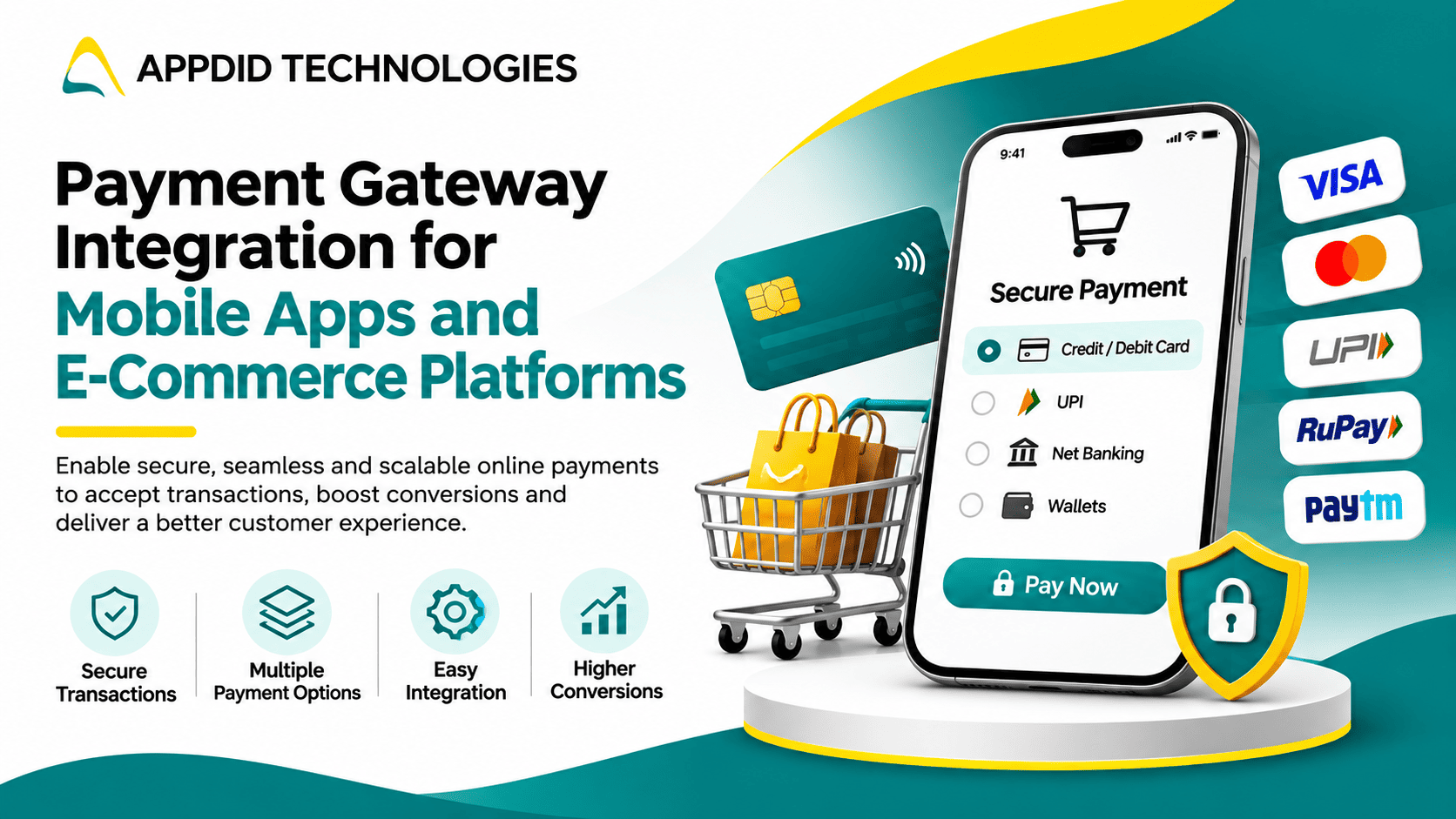
Payment Gateway Integration for Mobile Apps and E-Commerce Platforms
A smooth and secure payment experience is essential for any mobile app or e-commerce platform. Customers expect to complete transactions quickly, choose their preferred payment method, and receive instant confirmation. If the checkout process is complicated or payments fail frequently, businesses may lose potential sales.
Payment gateway integration connects an app or website to a payment service that securely processes online transactions. It allows businesses to accept digital payments, manage transaction statuses, and provide customers with a convenient checkout experience.
Whether you are launching a shopping app, building an e-commerce website, or developing a subscription-based platform, choosing the right payment gateway and integration approach is an important part of development.
Key Takeaways
-
Payment gateways enable businesses to accept online payments.
-
Multiple payment methods can improve checkout convenience.
-
Security and compliance must be considered from the beginning.
-
Payment status handling is essential for reliable transactions.
-
The right gateway depends on business needs, markets, and transaction types.
What Is Payment Gateway Integration?
A payment gateway securely transfers payment information between a customer, business, and payment processor. It helps authorize and process transactions while returning a payment status to the app or website.
A typical payment flow looks like this:
Customer Checkout → Payment Gateway → Payment Processing → Transaction Status → Order Confirmation
The integration should ensure that the app updates an order only after receiving and verifying the appropriate payment status.
For businesses developing a complete digital platform, payment integration can be planned alongside mobile app development or e-commerce app development.
Essential Features of Payment Gateway Integration
1. Multiple Payment Methods
Customers may prefer different payment options depending on their location and purchasing habits. A platform can support methods such as:
-
UPI
-
Debit and credit cards
-
Net banking
-
Digital wallets
-
Buy Now, Pay Later, where available
-
International payment methods, depending on the gateway
Offering relevant payment methods can make checkout easier and reduce friction.
2. Secure Payment Processing
Payment security is a critical part of integration. Businesses should use trusted payment providers and follow applicable security requirements.
Sensitive payment details should be handled through secure gateway interfaces or approved tokenization methods. Platforms should also consider encryption, access controls, and secure handling of transaction data.
Security should be considered throughout the development process. Read more about why encryption is important for app developers and how secure API integration in mobile app development supports reliable data exchange.
3. Payment Status and Order Confirmation
A payment may be successful, pending, failed, or cancelled. The app should clearly communicate the status and prevent duplicate orders or incorrect confirmations.
Server-side verification and payment gateway webhooks can help keep order records synchronized with transaction updates.
For platforms that connect multiple services, a well-planned mobile backend architecture can help manage transaction-related data and application workflows.
4. Refunds and Payment Cancellation
Customers may request refunds when an order is cancelled or returned. An effective integration should support refund workflows, transaction references, and status updates.
The business should also define how partial refunds, failed refunds, and payment disputes will be handled.
5. Recurring Payments and Subscriptions
For platforms offering memberships, subscriptions, or recurring services, the payment gateway may support recurring billing or authorized payment mandates.
The available functionality depends on the payment provider, payment method, and applicable regulations.
6. Transaction History and Reporting
A transaction dashboard helps businesses review payment activity, monitor failed transactions, track refunds, and reconcile payments with orders.
Useful reporting can include transaction amount, payment method, status, date, and reference number.
These capabilities can also be connected with business applications such as custom CRM software development to support customer and transaction management.
Payment Gateway Integration for Mobile Apps vs. E-Commerce Websites
|
Mobile Apps |
E-Commerce Platforms |
|
Integrates with Android and iOS checkout flows |
Integrates with website checkout pages |
|
Supports app-based payment experiences |
Supports browser-based transactions |
|
May require SDK integration |
May use APIs, plugins, or hosted checkout |
|
Handles app navigation and payment callbacks |
Handles cart, checkout, and order status |
|
Must account for app-specific payment rules |
Must account for website security and checkout flow |
The integration method depends on the platform, business model, and type of products or services being sold.
For mobile projects, businesses may need Android app development, iOS app development, or cross-platform app development. For browser-based platforms, the checkout experience can be planned as part of website development.
How to Choose the Right Payment Gateway
Before selecting a payment provider, consider the following factors:
|
Selection Factor |
What to Check |
|
Supported Payment Methods |
Does it support the methods your customers use? |
|
Transaction Fees |
What are the setup, transaction, and refund charges? |
|
Integration Options |
Does it offer APIs, SDKs, plugins, or hosted checkout? |
|
Security |
Does it support appropriate security and compliance requirements? |
|
Settlement Time |
How quickly are payments settled to your business account? |
|
International Payments |
Can it support your target markets and currencies? |
|
Support |
Is technical support available when payment issues occur? |
The best gateway is not necessarily the one with the lowest transaction fee. Reliability, customer experience, integration requirements, and business needs should also be considered.
Businesses should also evaluate their platform requirements before finalizing the development approach. This includes understanding the right mobile app development framework and the technologies required for the project.
Common Payment Integration Challenges
Payment integration can involve technical and operational challenges, including:
-
Failed or delayed transactions
-
Incorrect payment status updates
-
Duplicate payment attempts
-
Refund and reconciliation issues
-
Compatibility with existing systems
-
Security and compliance requirements
A properly planned integration should include testing for successful payments, failed payments, cancellations, refunds, delayed responses, and duplicate requests.
Suggested infographic:
Select Gateway → Integrate API/SDK → Configure Checkout → Test Transactions → Verify Payment Status → Launch
Build Your App with Payment Gateway Integration
A reliable payment experience can help businesses create a smoother customer journey—from browsing products to completing an order.
Appdid Technologies helps businesses explore custom mobile app and e-commerce development solutions, including payment integration based on project requirements. The development approach can be planned around the required payment methods, platform technology, transaction workflows, and business objectives.
Planning to launch an app or e-commerce platform with secure online payments? Connect with Appdid Technologies to discuss your development requirements and payment integration options.
Frequently Asked Questions
What is payment gateway integration?
Payment gateway integration connects a mobile app or website to a payment service so customers can make online transactions securely.
Which payment methods can be integrated?
Depending on the gateway and market, payment methods may include UPI, cards, net banking, wallets, and other supported digital payment options.
Is payment gateway integration secure?
It can be secure when implemented using trusted providers, appropriate security controls, and applicable compliance practices.
Can a payment gateway be integrated into both mobile apps and websites?
Yes. Many payment providers offer APIs, SDKs, hosted checkout, or plugins for different platforms. The suitable method depends on the app or website technology.
How long does payment gateway integration take?
The timeline depends on the platform, gateway, checkout requirements, and testing scope. A simple integration may take less time than a custom checkout with refunds, subscriptions, and multiple payment methods.
Final Thoughts
Payment gateway integration is a key component of modern mobile apps and e-commerce platforms. A well-planned implementation supports convenient checkout, reliable transaction handling, and a better customer experience.
By choosing a suitable payment provider and carefully testing the integration, businesses can build a payment flow that supports customer trust and business growth.