Custom Business Management System Cost in India
How Much Does It Cost to Develop a Custom Business Management System?
As businesses grow, managing sales, inventory, employees, finances, and daily operations across multiple tools can become difficult. Manual processes and disconnected systems may lead to duplicated work, reporting delays, and limited visibility into business performance.
A custom business management system brings essential business processes into one centralized platform. It can be designed around your company’s workflows, helping teams manage information, automate tasks, and make better operational decisions.
But how much does it cost to develop one? The answer depends on the features, number of modules, integrations, and complexity of the system.
Key Takeaways
-
Custom business management system costs depend on project scope.
-
A basic system costs less than a multi-module business platform.
-
Integrations, automation, and user roles affect the budget.
-
Maintenance and hosting should be included in long-term planning.
-
Starting with essential modules can help control development costs.
How Much Does Custom Business Management Software Cost in India?
The following are indicative planning estimates for custom software development in India. Actual pricing may vary based on requirements, development approach, and project complexity.
|
System Type |
Indicative Development Cost |
|
Basic Business Management Tool |
₹2 lakh–₹5 lakh |
|
Small Business Management System |
₹4 lakh–₹10 lakh |
|
Multi-Module Business Application |
₹8 lakh–₹20 lakh |
|
Advanced ERP-Style System |
₹15 lakh–₹40 lakh+ |
|
Complex Enterprise Platform |
₹40 lakh+ |
These are broad estimates, not fixed quotations or confirmed Appdid pricing. A detailed requirement assessment is needed to determine the actual project budget.
Businesses planning a larger digital solution can also explore custom software development services to understand the development possibilities based on their operational requirements.
What Features Can a Business Management System Include?
A custom system can include different modules depending on the type of business and its operational needs.
1. Customer and Lead Management
A CRM module helps businesses maintain customer records, manage enquiries, track sales opportunities, and organize follow-ups.
A dedicated CRM software development solution can support customer management, sales activities, and business-specific workflows.
2. Inventory and Order Management
Businesses that manage products or stock can use inventory features to track available quantities, purchase orders, sales orders, and stock movement.
For businesses handling online orders, integrating e-commerce app development capabilities can help connect product management, orders, and customer interactions.
3. Employee and Task Management
This module can support employee records, task assignments, work progress, attendance workflows, and internal coordination.
4. Finance and Billing
Depending on the scope, a system may include invoicing, expense tracking, payment records, and financial reports. Complex accounting requirements may need integration with dedicated accounting software.
Payment functionality can also be connected through suitable payment gateway integration and other third-party services.
5. Reports and Dashboards
A centralized dashboard can provide visibility into sales, operations, inventory, and other key business metrics.
Suggested infographic:
CRM + Inventory + Employee Management + Billing + Reports → Centralized Business Management System
What Factors Affect the Development Cost?
1. Number of Modules
A system with only customer and task management will generally require less development effort than one combining sales, inventory, finance, HR, and reporting.
2. Custom Features and Automation
Business-specific workflows, approval processes, notifications, and automated actions can increase development complexity.
3. User Roles and Permissions
A system may have different access levels for administrators, managers, employees, vendors, or customers. More complex permissions require additional planning and testing.
4. Third-Party Integrations
Connecting the system with payment gateways, accounting tools, CRM platforms, communication services, or existing databases can affect the budget.
The availability and functionality of third-party APIs should be evaluated before finalizing the project scope.
5. Web and Mobile App Requirements
A browser-based business system may have a different scope from a platform that also requires Android and iOS applications.
Businesses that need mobile access can evaluate Android app development, iOS app development, or cross-platform app development, depending on their requirements.
6. Data Migration and Security
Moving existing business records into the new system, validating data, and implementing appropriate security controls can add to the project effort.
Security planning should include suitable access controls, data protection, and secure communication between system components. Businesses can also review the importance of encryption for app developers.
Custom Business Management System vs. Ready-Made Software
|
Ready-Made Software |
Custom Business Management System |
|
Offers predefined features |
Designed around business requirements |
|
Usually quicker to implement |
Requires planning and development |
|
May have subscription or per-user fees |
Costs depend on development and support scope |
|
Customization depends on the provider |
Features can be planned around specific workflows |
|
Suitable for standard operations |
Useful for unique or connected processes |
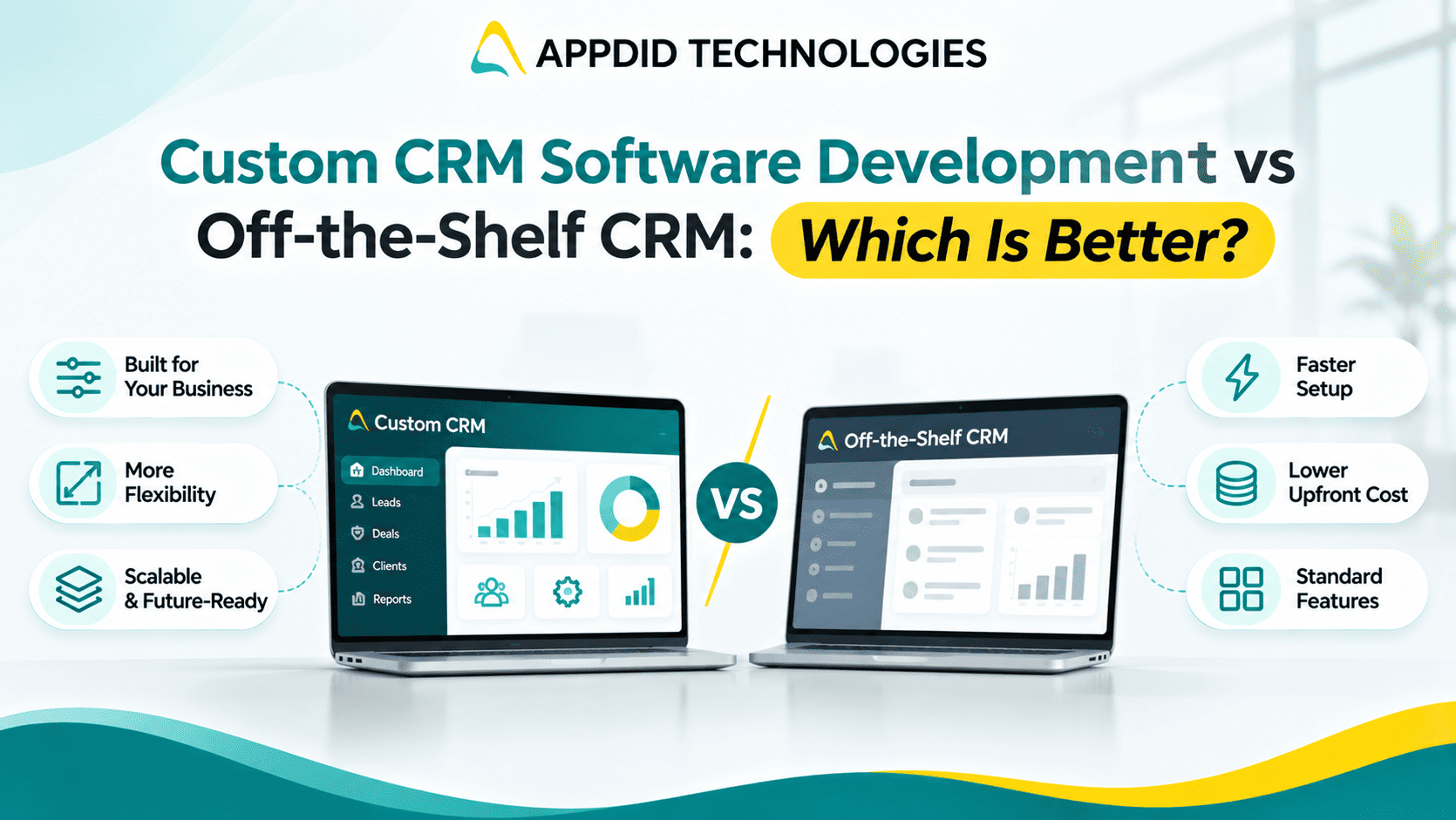
Ready-made software may be the more practical option when it already meets your requirements. Custom development becomes worth evaluating when your business needs specialized workflows or several systems to work together.
How to Reduce Development Costs
You do not need to build every feature in the first release. A phased development approach can help manage both cost and complexity.
-
Identify the main business problem.
-
List the essential features for the first version.
-
Prioritize modules that save time or improve operations.
-
Avoid unnecessary integrations at the beginning.
-
Plan future features based on actual user feedback.
For example, a business may start with CRM, inventory, and reporting, then add advanced automation or mobile access in a later phase.
This approach is similar to building a Minimum Viable Product (MVP), where the initial version focuses on essential functionality before additional features are introduced. Read more about the mobile app development process and planning.
What Are the Ongoing Costs After Development?
The initial development budget is only one part of the total investment. Businesses should also plan for:
-
Cloud hosting and infrastructure
-
Software maintenance and bug fixes
-
Security updates
-
Third-party subscription or API charges
-
New features and future enhancements
-
Technical support and monitoring
The ongoing cost depends on system usage, hosting requirements, support arrangements, and how frequently the software is updated.
Build a Custom Business Management System with Appdid Technologies
A business management system should simplify your operations and help your team work more efficiently. The right solution depends on your current workflows, business goals, and the features you need.
Appdid Technologies helps businesses explore custom software development solutions based on their operational requirements and growth plans. The development scope can be planned around essential modules, integrations, user access, and future improvements.
Planning to build a custom business management system? Connect with Appdid Technologies to discuss your requirements and explore a suitable development approach.
Frequently Asked Questions
How much does a custom business management system cost?
The cost depends on the number of modules, features, integrations, and complexity. A basic tool may require a smaller budget than a multi-module or enterprise-level platform.
How long does it take to develop a business management system?
The timeline depends on project scope, integrations, testing, and the number of modules. A focused first version generally takes less time than a full business management platform.
Can a custom business management system include CRM and inventory?
Yes. A custom platform can combine CRM, inventory, order management, employee workflows, reporting, and other modules based on business requirements.
Is custom business management software suitable for small businesses?
It can be suitable when the software solves a clear operational problem and the development scope fits the business’s budget and goals.
Can the system be upgraded as the business grows?
Yes. The system can be planned for future modules, users, and integrations. Scalability should be considered during the initial design and development.
Final Thoughts
The cost of developing a custom business management system depends on what your business needs the software to do. A focused solution can help address specific operational challenges, while a larger platform can connect multiple departments and workflows.
Defining your requirements, prioritizing essential features, and planning for long-term maintenance can help you make a more informed investment in custom software.