
AI in Mobile Apps: Beginner’s Guide for Businesses
What Is AI in Mobile Apps? A Beginner’s Guide
Quick Summary
-
Artificial Intelligence is transforming how modern mobile applications function.
-
AI helps apps understand user behavior, automate processes, and deliver personalized experiences.
-
Features like chatbots, voice assistants, recommendation systems, and predictive analytics are powered by AI.
-
Businesses use AI-powered apps to improve engagement, automate customer service, and increase revenue.
-
AI integration helps mobile apps become smarter, faster, and more efficient.
-
Understanding AI in Mobile Apps helps businesses leverage modern technology to stay competitive in the digital world.
Introduction
Mobile applications have evolved significantly over the past decade. What started as simple digital tools has now become intelligent platforms capable of understanding user behavior, predicting preferences, and automating tasks.
One of the biggest technological drivers behind this transformation is Artificial Intelligence (AI). Today, AI powers some of the most advanced mobile applications used for shopping, navigation, entertainment, healthcare, and productivity.
For businesses planning to build smarter applications, working with experienced development partners like Appdid can make it easier to integrate advanced technologies and create scalable mobile solutions.
Understanding AI in Mobile Apps is essential for startups, entrepreneurs, and enterprises that want to build innovative digital products and stay competitive in the evolving mobile ecosystem.
This beginner-friendly guide explains what AI in mobile apps is, how it works, and why businesses are increasingly adopting AI-powered mobile solutions.
What Is Artificial Intelligence in Mobile Apps?
Artificial Intelligence in mobile applications refers to the integration of intelligent algorithms and machine learning models that allow apps to analyze data, recognize patterns, and make decisions with minimal human intervention.
Unlike traditional applications that rely on predefined rules, AI-powered apps can learn from user behavior and continuously improve their performance.
AI enables mobile apps to perform tasks such as:
-
Recognizing speech and voice commands
-
Understanding user preferences
-
Providing personalized recommendations
-
Automating customer interactions
-
Predicting user behavior
This makes mobile applications more intuitive, responsive, and user-friendly.
How AI Works in Mobile Applications
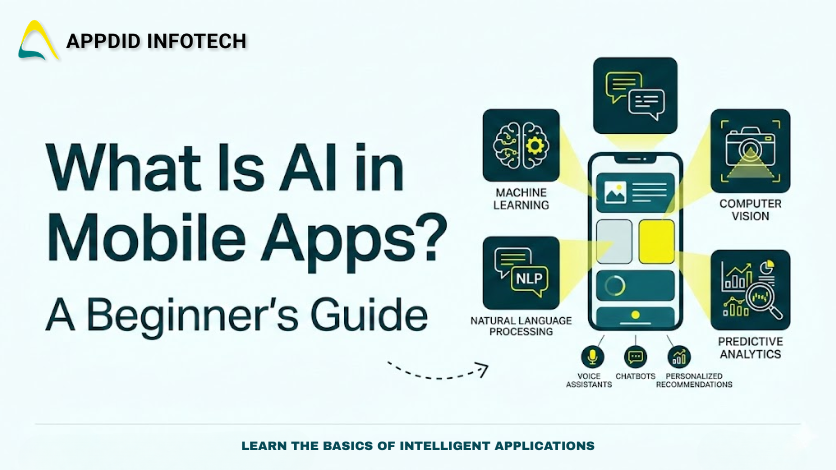
AI in mobile apps relies on several technologies that work together to create intelligent experiences.
Machine Learning
Machine learning allows applications to analyze large amounts of data and identify patterns. Over time, the app learns from user interactions and improves its accuracy.
Examples include recommendation engines and predictive search systems.
Natural Language Processing (NLP)
Natural Language Processing helps apps understand and interpret human language.
This technology powers features such as:
-
Voice assistants
-
Chatbots
-
Voice search
-
Smart replies
NLP enables seamless communication between users and mobile applications.
Computer Vision
Computer vision allows apps to analyze and interpret visual information from images and videos.
Common applications include:
-
Facial recognition
-
Image search
-
Augmented reality filters
-
Object detection
This technology is widely used in social media apps, security apps, and retail platforms.
Predictive Analytics
Predictive analytics helps apps anticipate user needs based on past data.
For example, a food delivery app may recommend dishes based on previous orders or suggest restaurants based on location and time of day.
Predictive technology helps businesses improve personalization and increase customer engagement.
Key Benefits of AI in Mobile Apps
AI-powered mobile applications provide several advantages for businesses and users alike.
Personalized User Experiences
AI analyzes user behavior to deliver tailored content, recommendations, and notifications. This improves user satisfaction and increases engagement.
Personalization has become one of the most important advantages of AI in Mobile Apps, helping businesses retain customers and increase app usage.
Improved Customer Support
AI chatbots and virtual assistants allow businesses to provide instant customer support without human intervention.
Benefits include:
-
24/7 customer service
-
Faster query resolution
-
Reduced operational costs
Automated support systems improve efficiency while maintaining high service quality.
Enhanced App Security
AI can detect unusual patterns and suspicious activities to protect users and businesses from security threats.
Examples include:
-
Fraud detection
-
Biometric authentication
-
Behavioral security monitoring
These systems help ensure safer digital experiences.
Smart Automation
AI allows apps to automate repetitive tasks and processes.
Examples include:
-
Automated scheduling
-
Smart notifications
-
Workflow automation
Automation improves efficiency and reduces manual workload.
Popular Examples of AI in Mobile Apps
Many well-known mobile apps already use AI technology to enhance their services.
Smart Assistants
Voice assistants help users perform tasks using voice commands such as setting reminders, searching the internet, or sending messages.
Recommendation Systems
Streaming platforms, shopping apps, and social media platforms use AI to recommend relevant content and products based on user behavior.
These recommendation engines are one of the most widely used implementations of AI in Mobile Apps today.
AI Chatbots
Businesses integrate AI chatbots in their apps to handle customer inquiries, process requests, and provide quick support.
Chatbots reduce response times and improve customer satisfaction.
Image and Face Recognition
AI-powered recognition systems are used in:
-
Photo organization apps
-
Security apps
-
Social media platforms
-
Payment authentication
This technology improves both convenience and security.
Industries Using AI-Powered Mobile Apps
AI technology is transforming multiple industries through mobile applications.
Healthcare
AI-powered health apps help users track symptoms, monitor health conditions, and receive personalized medical insights.
eCommerce
Online shopping platforms use AI to provide personalized product recommendations, dynamic pricing, and customer behavior analysis.
Finance and Banking
Financial apps use AI for fraud detection, automated customer support, and intelligent financial insights.
Food Delivery and Transportation
Delivery and transportation apps use AI for route optimization, demand prediction, and dynamic pricing.
Future Trends of AI in Mobile Applications
The future of mobile apps will be increasingly powered by artificial intelligence.
Some key trends include:
-
Hyper-personalized app experiences
-
AI-driven voice interfaces
-
Intelligent automation
-
Advanced predictive analytics
-
AI-powered augmented reality
As technology evolves, businesses that adopt AI early will gain significant competitive advantages.
Why Businesses Should Invest in AI-Powered Apps
AI integration is no longer a luxury—it is becoming a necessity for modern mobile applications.
Businesses that implement AI technologies can:
-
Improve customer experiences
-
Increase engagement and retention
-
Automate operations
-
Gain valuable user insights
-
Scale their digital products faster
Investing in AI in Mobile Apps helps companies build smarter applications that adapt to user needs and market demands.
FAQs
What is AI in mobile apps?
AI in mobile apps refers to the use of artificial intelligence technologies such as machine learning, natural language processing, and predictive analytics to make apps smarter and more personalized.
How do mobile apps use artificial intelligence?
Mobile apps use AI to analyze user data, automate tasks, provide recommendations, power chatbots, and enable voice or image recognition.
Are AI-powered mobile apps expensive to develop?
The cost depends on the complexity of the AI features, the amount of data processing required, and the overall functionality of the application.
Which industries benefit most from AI mobile apps?
Industries such as healthcare, finance, eCommerce, transportation, and entertainment benefit significantly from AI-powered applications.
Can small businesses use AI in their mobile apps?
Yes. AI tools and frameworks have become more accessible, allowing startups and small businesses to integrate AI features into their mobile applications.
Conclusion
Artificial Intelligence is revolutionizing mobile applications by making them smarter, more efficient, and highly personalized. From chatbots and voice assistants to predictive recommendations and advanced security, AI is shaping the future of mobile technology.
Businesses that adopt AI-powered solutions can create better user experiences, automate processes, and gain valuable insights from data.
If you are planning to build a modern mobile application powered by intelligent technology, working with experienced developers is essential.
Appdid specializes in developing innovative mobile applications that integrate advanced technologies like artificial intelligence to help businesses grow and stay competitive.
Ready to Build an AI-Powered Mobile App?
Transform your idea into a smart, scalable digital product that delivers powerful user experiences.
Contact Appdid today and start building your AI-driven mobile application development in Mumbai.