
10 Web Development Best Practices for Front-End, Back-End & Full-Stack Development
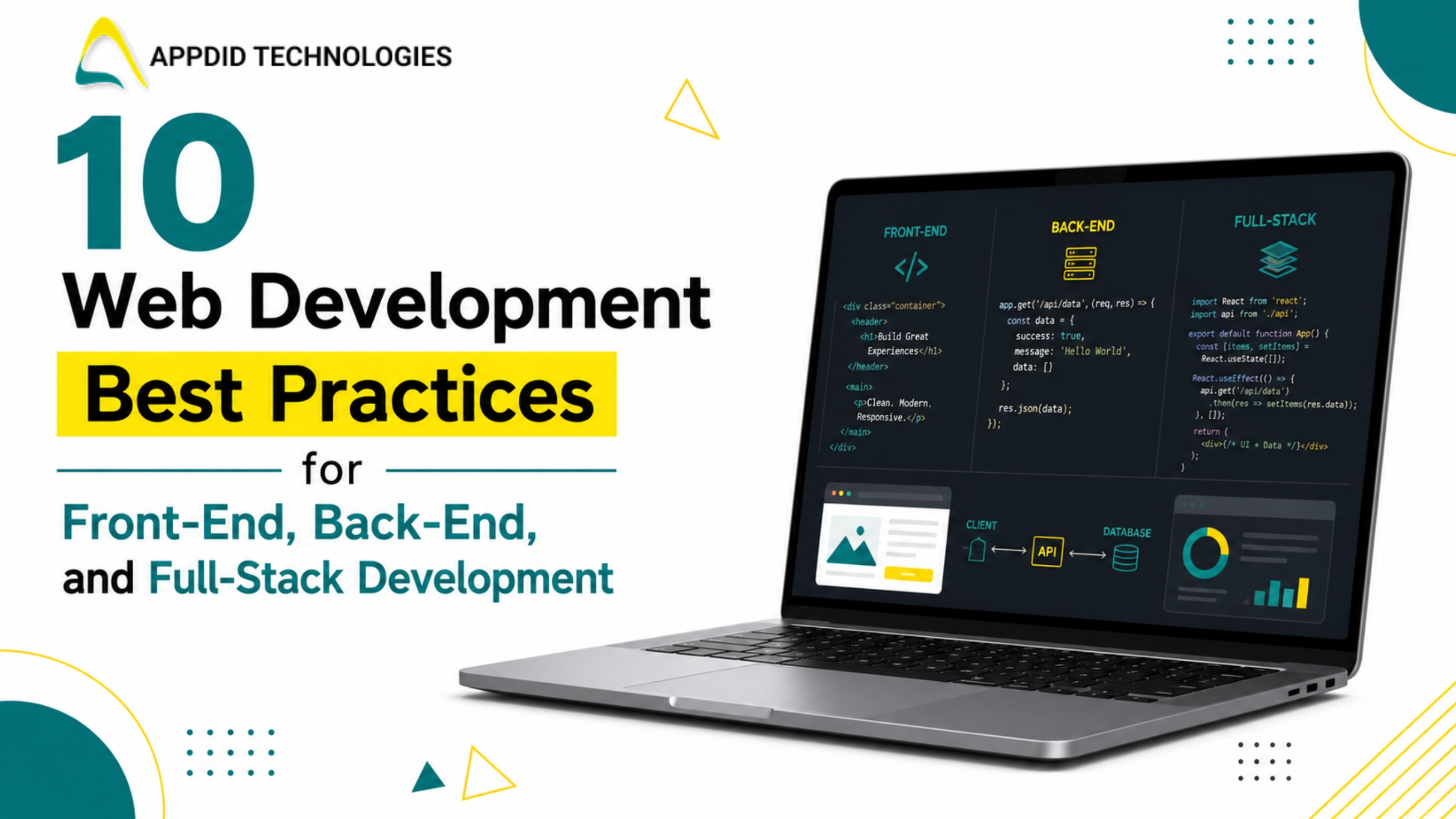
10 Web Development Best Practices for Front-End, Back-End, and Full-Stack Development
Building a successful website or web application goes far beyond writing clean code. Modern users expect fast loading times, intuitive user experiences, robust security, and seamless performance across devices. Following proven web development best practices helps businesses create scalable, secure, and high-performing digital solutions that support long-term growth.
Whether you're developing a corporate website, SaaS platform, eCommerce store, or enterprise web application, adopting the right development practices reduces technical debt, improves maintainability, and delivers a better experience for users.
At Appdid, we combine modern technologies, scalable architectures, and industry standards to build reliable digital products. Explore our comprehensive Web Development Services to learn how we help businesses transform ideas into powerful web and mobile solutions.
Why Web Development Best Practices Matter
Following established web development best practices provides several benefits:
-
Better website performance
-
Improved user experience
-
Enhanced security
-
Easier maintenance
-
Higher scalability
-
Better SEO performance
-
Faster development cycles
-
Lower long-term development costs
Whether you're building a simple business website or a complex enterprise platform, these best practices create a solid technical foundation.
1. Build with a Mobile-First Approach
More than half of web traffic now comes from mobile devices, making responsive design essential rather than optional.
A mobile-first approach ensures your application:
-
Adapts to different screen sizes
-
Loads quickly on smartphones
-
Provides intuitive navigation
-
Delivers consistent user experiences
Businesses planning digital products should prioritize responsive design from the beginning rather than treating it as an afterthought.
2. Optimize Website Performance
Performance directly impacts user satisfaction, engagement, and search engine rankings.
Improve performance by:
-
Compressing images
-
Minifying CSS and JavaScript
-
Implementing lazy loading
-
Reducing HTTP requests
-
Using browser caching
-
Leveraging CDN services
Fast websites improve conversion rates and reduce bounce rates.
3. Prioritize Security from Day One
Security should be integrated into every stage of development.
Essential security practices include:
-
HTTPS implementation
-
Input validation
-
SQL injection prevention
-
Cross-Site Scripting (XSS) protection
-
Authentication and authorization
-
Secure API communication
-
Regular security updates
Organizations building customer-facing applications should never compromise on security.
4. Write Clean and Maintainable Code
Readable code simplifies future development and maintenance.
Best practices include:
-
Consistent naming conventions
-
Modular architecture
-
Reusable components
-
Proper documentation
-
Version control
-
Code reviews
Clean code reduces bugs and accelerates future feature development.
5. Choose the Right Technology Stack
Every project has unique technical requirements.
Factors to consider include:
-
Project complexity
-
Scalability
-
Performance requirements
-
Budget
-
Development timeline
-
Team expertise
Selecting the right technologies early prevents expensive migrations later.
Businesses looking for scalable digital solutions can explore our Web & Mobile App Development Services in Mumbai, where we recommend technology stacks based on business objectives rather than trends.
6. Build Scalable Back-End Architecture
A scalable backend ensures your application can grow as users and traffic increase.
Key considerations include:
-
RESTful APIs
-
Database optimization
-
Caching strategies
-
Cloud infrastructure
-
Load balancing
-
Microservices where appropriate
Planning for scalability early minimizes future infrastructure challenges.
7. Focus on User Experience (UX)
Excellent functionality is only valuable if users can easily interact with your application.
Improve UX through:
-
Simple navigation
-
Consistent layouts
-
Accessible design
-
Clear calls-to-action
-
Fast interactions
-
Logical information architecture
A great user experience improves customer satisfaction and retention.
8. Test Continuously
Testing helps identify issues before deployment.
Recommended testing practices include:
-
Unit testing
-
Integration testing
-
UI testing
-
Cross-browser testing
-
Performance testing
-
Security testing
Continuous testing reduces production issues and improves software quality.
9. Optimize for SEO
Technical SEO should be part of the development process rather than an afterthought.
Important considerations include:
-
Semantic HTML
-
Fast page speed
-
Mobile responsiveness
-
Clean URL structure
-
Structured data
-
XML sitemaps
-
Proper heading hierarchy
SEO-friendly development helps websites achieve better visibility in search engines.
10. Plan for Long-Term Maintenance
Launching a website is only the beginning.
Ongoing maintenance should include:
-
Software updates
-
Security patches
-
Performance monitoring
-
Bug fixes
-
Backup strategies
-
Feature enhancements
A long-term maintenance strategy keeps applications secure, reliable, and competitive.
Front-End vs Back-End vs Full-Stack Development
|
Development Type |
Primary Focus |
Technologies |
|
Front-End |
User Interface |
HTML, CSS, JavaScript, React, Angular, Vue |
|
Back-End |
Server, Database, APIs |
Java, Node.js, Python, PHP, .NET |
|
Full-Stack |
Complete Application |
Front-End + Back-End Technologies |
Each role contributes to building secure, scalable, and high-performing web applications.
Emerging Trends in Modern Web Development
Modern development continues to evolve with technologies such as:
-
AI-powered web applications
-
Progressive Web Apps (PWAs)
-
Serverless architecture
-
Headless CMS
-
Cloud-native development
-
API-first architecture
-
Edge computing
Businesses embracing these technologies gain greater flexibility and future scalability. You can also explore our guide on future-ready application development to understand how modern technologies are shaping digital products.
Conclusion
Following proven web development best practices helps businesses build secure, scalable, and user-friendly websites that perform well today and remain adaptable for future growth.
From mobile-first design and security to scalable architecture and continuous testing, these best practices reduce technical challenges while improving user experience and long-term maintainability.
Investing in quality development practices from the beginning saves time, reduces costs, and creates a stronger digital foundation for your business.
Appdid – Expert Web & Mobile Development Company
At Appdid, we build secure, scalable, and high-performance web and mobile applications tailored to modern business needs.
Our expertise includes custom web development, Android and iOS applications, Flutter, React Native, enterprise software, cloud-native solutions, API integrations, and UI/UX design.
If you're planning a new digital product, explore our Portfolio to see projects we've delivered across industries.
Have an idea for a website or web application? Contact Us to discuss your project with our development experts and discover the right technology solution for your business.
Frequently Asked Questions
What are web development best practices?
Web development best practices are proven techniques and standards that improve website performance, security, maintainability, scalability, and user experience.
Why are web development best practices important?
They help create faster, more secure, and scalable applications while reducing development costs and simplifying future maintenance.
What is the difference between front-end, back-end, and full-stack development?
Front-end development focuses on the user interface, back-end development manages servers, databases, and APIs, while full-stack development combines both disciplines.
How can businesses improve website performance?
Businesses can optimize performance through image compression, code minification, caching, CDN implementation, responsive design, and efficient backend architecture.
Why choose Appdid for web development?
Appdid delivers custom web and mobile solutions using modern technologies, scalable architectures, secure coding practices, and user-focused design to help businesses achieve long-term digital success.