
SPA vs MPA: Which Is Best for Your Project?
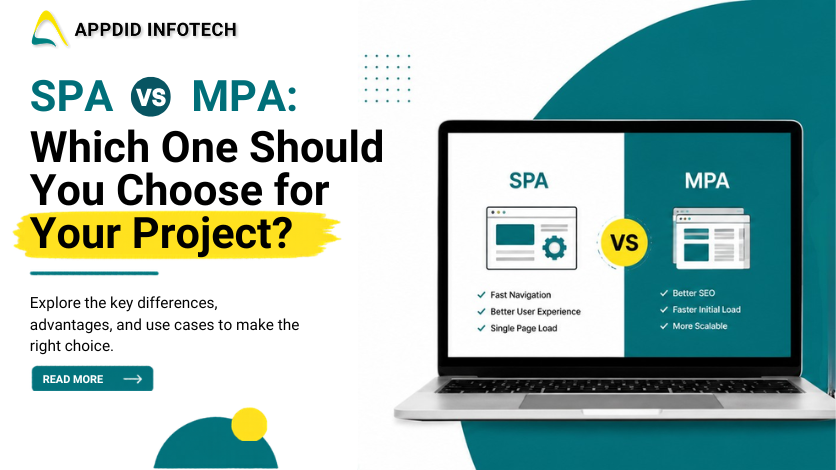
SPA vs MPA: Which One Should You Choose for Your Project?
Choosing the right web architecture is one of the most important decisions for any digital product. Businesses often struggle to decide between a Single Page Application (SPA) and a Multi-Page Application (MPA), especially when planning scalable websites or web apps.
At Appdid, a leading web and app development company in India, we help startups, enterprises, and businesses build high-performance digital solutions tailored to their goals. Whether you need a dynamic web platform, eCommerce solution, or enterprise application, understanding the difference between SPA vs MPA is essential before starting development.
This guide explains the key differences, advantages, disadvantages, and best use cases of SPA and MPA architectures so you can make the right decision for your project.
What Is SPA?
A Single Page Application (SPA) is a web application that loads a single HTML page and dynamically updates content without reloading the entire page. This creates a faster, smoother, and more app-like user experience.
Popular examples of SPA platforms include:
-
Gmail
-
Facebook
-
Netflix
-
Trello
SPAs are commonly built using modern JavaScript frameworks and libraries such as:
-
React.js
-
Angular
-
Vue.js
These technologies help developers create highly interactive applications with seamless navigation, real-time updates, and improved performance.
What Is MPA?
A Multi-Page Application (MPA) is a traditional web architecture where each interaction loads a new page from the server.
Common examples include:
-
eCommerce websites
-
News portals
-
Corporate websites
-
Blogging platforms
MPAs are commonly built using:
-
PHP
-
Laravel
-
ASP.NET
-
Django
-
Traditional server-side rendering frameworks
SPA vs MPA: Key Differences
|
Feature |
SPA |
MPA |
|
Page Loading |
Single page reload-free experience |
Multiple page reloads |
|
Speed |
Faster after initial load |
Slower due to page refreshes |
|
SEO |
More challenging |
Better SEO support |
|
User Experience |
Smooth and app-like |
Traditional navigation |
|
Development Complexity |
Higher frontend complexity |
Easier backend-driven structure |
|
Scalability |
Great for dynamic apps |
Better for large content websites |
|
Performance |
Faster interactions |
Better initial page indexing |
|
Security |
Requires strong frontend security |
More server-side protection |
Understanding these differences is essential when comparing SPA vs MPA for your project.
Advantages of SPA
1. Faster User Experience
SPAs load content dynamically without refreshing the entire page, creating a significantly faster browsing experience for users. Once the initial page is loaded, only the required content updates, which reduces waiting time and improves overall responsiveness.
This fast interaction is especially beneficial for modern users who expect real-time performance similar to mobile applications.
2. Smooth Navigation
One of the biggest advantages of SPA architecture is seamless navigation. Users can move between sections without page reloads, making the experience smoother and more engaging.
This app-like behavior improves user satisfaction and keeps visitors engaged for longer durations.
3. Better for Mobile Experiences
SPA architecture works exceptionally well for responsive and mobile-first platforms. Since SPAs focus on dynamic rendering and faster interactions, they provide a better experience on smartphones and tablets.
Businesses targeting mobile users often prefer SPAs because of their speed and fluid interface.
4. Reduced Server Load
In SPAs, most rendering happens on the client side rather than repeatedly requesting entire pages from the server. This reduces server traffic and improves performance efficiency.
As a result, businesses can handle large user interactions with optimized backend resources.
5. Easier API Integration
SPAs integrate efficiently with REST APIs, GraphQL, and modern backend systems. This makes it easier for developers to connect applications with third-party services, cloud platforms, and mobile apps.
Modern JavaScript frameworks like React.js and Angular are widely used to build API-driven SPA applications.
6. Improved User Engagement
Because of faster loading and seamless interactions, SPAs often improve user engagement and retention. Users are more likely to stay on websites that feel smooth and interactive.
This is particularly important for SaaS platforms, dashboards, and social media applications.
7. Better Offline Capabilities
Many SPAs can use browser caching and Progressive Web App (PWA) technologies to offer limited offline functionality.
This improves accessibility and performance even when internet connectivity is unstable.
Disadvantages of SPA
1. SEO Challenges
Search engines may struggle to index JavaScript-heavy SPA content if the application is not optimized correctly. Traditional crawlers often face difficulties rendering dynamic content.
Although technologies like Server-Side Rendering (SSR) and pre-rendering improve SPA SEO, additional optimization is usually required.
2. Slower Initial Loading
The initial page load in an SPA can sometimes be slower because large JavaScript files and assets are downloaded upfront.
For users with slower internet connections, this may affect the first impression of the application.
3. Browser Dependency
SPAs rely heavily on JavaScript support. If a user disables JavaScript or uses outdated browsers, certain functionalities may not work properly.
This dependency can occasionally impact compatibility across older systems.
4. Security Concerns
Client-side rendering may increase exposure to security vulnerabilities if proper protection measures are not implemented.
Developers must carefully handle authentication, API security, and data validation to protect user information.
5. Complex Development Process
SPA development often requires advanced frontend expertise and complex state management.
Technologies like React.js, Vue.js, and Angular require skilled developers to maintain scalability and performance.
6. Memory Usage Issues
Since SPAs continuously run within the browser, they may consume more memory over time.
Large applications with poor optimization can experience performance slowdowns on low-end devices.
Advantages of MPA
1. Better SEO Performance
MPAs are easier for search engines to crawl and index because each page has a separate URL and dedicated content.
This makes MPAs ideal for businesses focusing on organic traffic, blogging, and content marketing strategies.
2. Scalable for Large Websites
Content-heavy websites benefit from organized multi-page structures. MPAs make it easier to manage large amounts of content efficiently.
This architecture is commonly used for enterprise portals, eCommerce websites, and educational platforms.
3. Easier Analytics Tracking
Traditional page structures simplify analytics tracking and user behavior monitoring.
Businesses can easily measure page performance, bounce rates, and user journeys using tools like Google Analytics.
4. Strong Browser Compatibility
MPAs work well across older browsers and devices because they rely less on heavy client-side rendering.
This ensures consistent accessibility for a broader audience.
5. Better Security Management
Since much of the rendering and processing happens on the server side, MPAs can provide stronger control over security.
This is especially important for banking, healthcare, and enterprise-level applications.
6. Easier Content Management
Managing content across multiple pages is often simpler in MPA architecture, especially when integrated with CMS platforms like WordPress or Drupal.
This flexibility makes MPAs suitable for businesses regularly publishing content.
Disadvantages of MPA
1. Slower Navigation
Each interaction in an MPA may require a complete page reload from the server.
This can create slower transitions compared to the seamless experience provided by SPAs.
2. Higher Server Requests
MPAs generate frequent server requests because every page loads separately.
This increases server load and may affect performance during high traffic periods.
3. More Complex Maintenance
Managing multiple pages, templates, and backend systems can increase maintenance complexity.
Large MPAs often require more development time and resources.
4. Less Interactive User Experience
Compared to SPAs, MPAs may feel less dynamic and interactive because of repeated page refreshes.
Modern users often prefer smoother app-like experiences.
5. Longer Development Time
Building and maintaining separate pages with server-side rendering can increase overall development time.
This may impact project costs and launch timelines.
6. Repeated Resource Loading
MPAs often reload scripts, stylesheets, and layouts across different pages, which may affect performance efficiency.
Optimization techniques like caching are necessary to improve speed and usability.
SPA vs MPA: Which Is Better for SEO?
SEO is one of the biggest considerations when comparing SPA vs MPA.
SPA SEO
Modern JavaScript frameworks now support:
-
Server-side rendering (SSR)
-
Static site generation (SSG)
-
Pre-rendering
These improvements help SPAs become more SEO-friendly.
MPA SEO
MPAs naturally provide:
-
Better crawlability
-
Faster indexing
-
Easier metadata management
For content-heavy websites and blogs, MPAs often perform better in organic search rankings.
When Should You Choose SPA?
SPA is ideal for:
-
SaaS platforms
-
Social media apps
-
Dashboards
-
Real-time applications
-
Streaming platforms
-
Interactive web applications
Choose SPA if your priority is user interaction and app-like performance.
When Should You Choose MPA?
MPA is suitable for:
-
eCommerce websites
-
Enterprise portals
-
News websites
-
Educational platforms
-
Corporate websites
-
SEO-focused content platforms
Choose MPA if your project relies heavily on SEO and content structure.
Technologies Used for SPA and MPA Development
SPA Technologies
-
React.js
-
Angular
-
Vue.js
-
Next.js
-
Nuxt.js
MPA Technologies
-
Laravel
-
WordPress
-
ASP.NET
-
Django
-
Ruby on Rails
Choosing the right technology stack is critical for successful web development.
Performance Comparison: SPA vs MPA
SPA Performance
-
Faster interactions
-
Better user engagement
-
Efficient client-side rendering
MPA Performance
-
Better initial load SEO
-
Stable content rendering
-
Easier optimization for large-scale content
The right choice depends on your project goals.
Future Trends in Web Application Development
Modern web development is evolving rapidly. Businesses now combine SPA and MPA features using hybrid frameworks.
Popular trends include:
-
Progressive Web Apps (PWA)
-
Server-side rendering (SSR)
-
Jamstack architecture
-
AI-powered web experiences
-
Headless CMS integration
These technologies improve both performance and SEO.
FAQs: SPA vs MPA
1. What is the difference between SPA and MPA?
SPA loads a single page dynamically, while MPA loads separate pages from the server for each interaction.
2. Which is better for SEO: SPA or MPA?
MPA generally provides better SEO, though modern SPA frameworks can also achieve strong SEO with SSR and pre-rendering.
3. Is React a SPA?
Yes. React is commonly used to build Single Page Applications.
4. Which architecture is better for eCommerce websites?
MPA is often preferred for large eCommerce websites because of SEO and structured content advantages.
5. Can SPA and MPA be combined?
Yes. Many modern applications use hybrid architectures to combine the benefits of both.
Why Choose Appdid for Web and App Development?
At Appdid, we specialize in building scalable, high-performance digital platforms tailored to modern business needs. As a trusted web and app development company in India, we provide:
-
Custom web development
-
SPA and MPA development
-
React.js development
-
Enterprise web applications
-
Android app development
-
iOS app development services
-
UI/UX design solutions
Our expert developers help businesses choose the right architecture based on performance, scalability, and user experience goals.
Build Future-Ready Digital Solutions with Appdid
Looking for the best development partner for your next project? Appdid delivers innovative, SEO-friendly, and scalable web and mobile solutions tailored to your business.
Contact Appdid today to build powerful SPA and MPA applications that drive growth and user engagement.