
REST API vs GraphQL: Which One Should You Choose for App Development?
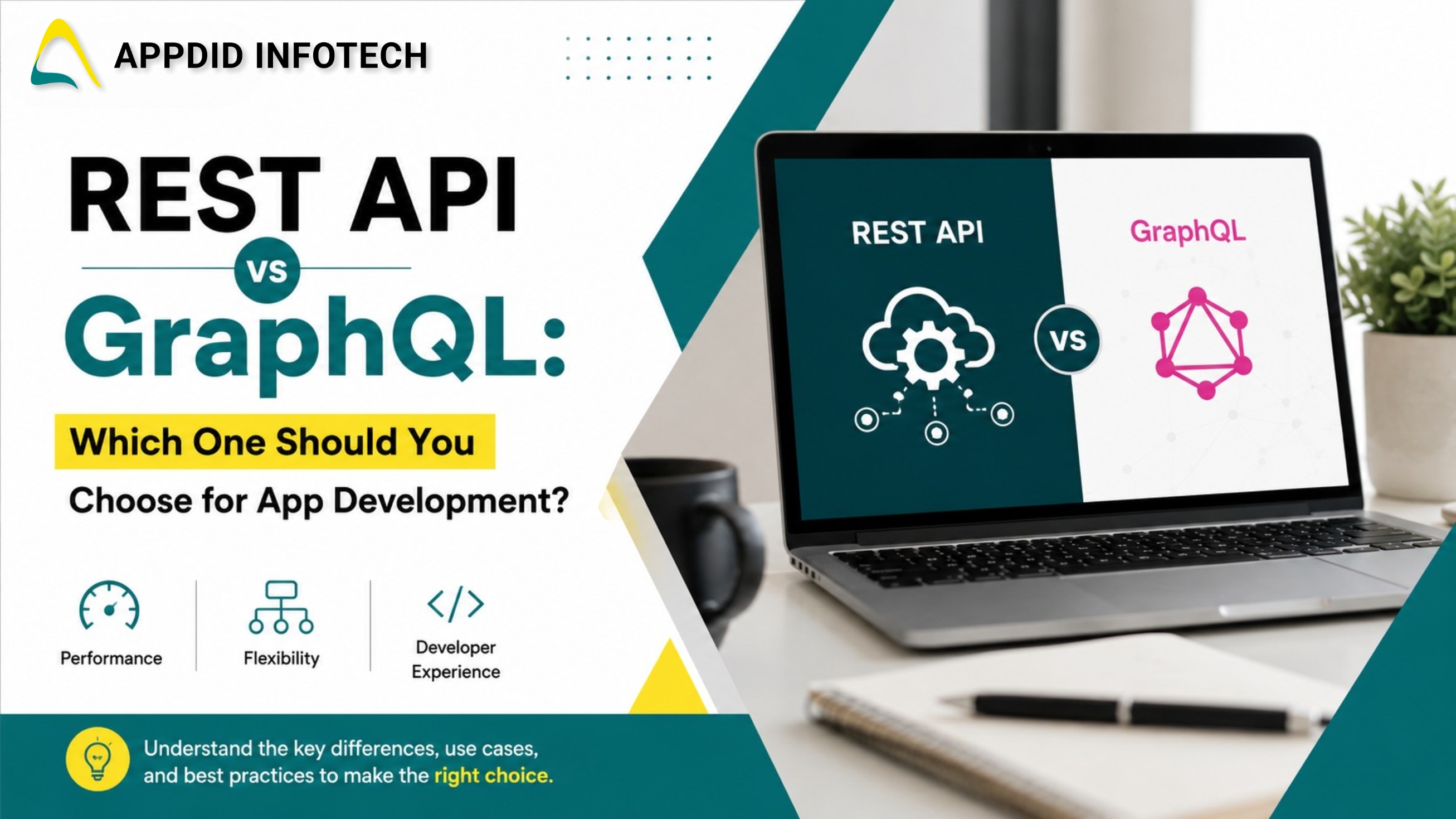
REST API vs GraphQL: Which One Should You Choose for App Development?
When building a modern mobile or web application, choosing the right API architecture is an important decision. One of the most common debates among developers and businesses is REST API vs GraphQL. Both technologies enable communication between the frontend and backend, but they work in different ways and offer unique advantages.
Whether you're developing a startup application, enterprise platform, or eCommerce solution, understanding the differences between REST and GraphQL can help you make the right technology choice for your project.
What Is a REST API?
REST (Representational State Transfer) is a widely used architectural style for building web services and APIs. REST APIs use standard HTTP methods such as:
-
GET
-
POST
-
PUT
-
DELETE
Each resource has a dedicated endpoint, making REST easy to understand, implement, and maintain.
For example:
-
/users
-
/products
-
/orders
REST APIs have been the standard choice for application development for many years because of their simplicity and reliability.
What Is GraphQL?
GraphQL is a query language and API runtime developed to provide more flexible data fetching.
Unlike REST, GraphQL uses a single endpoint where clients can request exactly the data they need.
Instead of receiving large datasets with unnecessary information, applications can fetch only the required fields, reducing data transfer and improving efficiency.
This makes GraphQL particularly attractive for modern mobile applications and complex digital platforms.
REST API vs GraphQL: Key Differences
1. Data Fetching
REST API
REST often requires multiple API calls to retrieve related data.
For example:
-
Get user information
-
Get user orders
-
Get user preferences
Each request may require a separate endpoint.
GraphQL
GraphQL allows all required data to be fetched through a single query.
This reduces network requests and improves performance.
2. Flexibility
REST API
REST returns predefined data structures.
Sometimes applications receive more data than required, leading to over-fetching.
GraphQL
GraphQL allows developers to specify exactly which fields they want.
This improves efficiency and gives developers greater control over data retrieval.
3. Performance for Mobile Apps
Mobile applications often operate on slower networks where performance matters.
GraphQL can reduce unnecessary data transfers, making it beneficial for:
-
Mobile apps
-
Super apps
-
Real-time platforms
-
Enterprise applications
Businesses investing in mobile app development in Mumbai frequently evaluate GraphQL for applications that require dynamic and efficient data handling.
4. Development Complexity
REST API
REST is easier to learn and implement.
Most developers are already familiar with REST architecture, making development and maintenance straightforward.
GraphQL
GraphQL offers greater flexibility but comes with additional complexity.
Teams may require more expertise to implement caching, security, and query optimization effectively.
5. Scalability
Both REST and GraphQL are scalable when implemented correctly.
REST works exceptionally well for:
-
Standard business applications
-
CRM systems
-
Content platforms
-
E-commerce applications
GraphQL is often preferred for:
-
Data-intensive applications
-
Multi-platform ecosystems
-
Applications with complex user interactions
When Should You Choose REST API?
REST remains an excellent choice for many projects.
Choose REST when:
-
The application has straightforward requirements
-
Development speed is a priority
-
Your team is experienced with REST architecture
-
Caching is important
-
The data structure is relatively stable
Many Android and iOS applications continue to use REST successfully because of its simplicity and proven reliability.
When Should You Choose GraphQL?
GraphQL may be a better option when:
-
Applications require flexible data fetching
-
Multiple frontend platforms share the same backend
-
Performance optimization is critical
-
User interfaces frequently change
-
Applications handle large datasets
For modern mobile experiences, GraphQL can significantly improve efficiency and user experience.
REST API vs GraphQL for Mobile App Development
When comparing REST API vs GraphQL for mobile applications, there is no universal winner.
REST works well for:
-
Business apps
-
Healthcare apps
-
Educational apps
-
CRM solutions
GraphQL works well for:
-
Social media platforms
-
On-demand service apps
-
Large eCommerce platforms
-
Real-time applications
The right choice depends on your application's goals, user requirements, and long-term scalability needs.
Businesses planning Android applications can explore our Android App Development Services in Mumbai to understand how modern API architectures impact app performance.
Similarly, companies building premium iOS experiences can benefit from scalable backend solutions alongside our iOS App Development Services in Mumbai.
REST API vs GraphQL: Which Is Better?
The answer depends on your project.
If you need simplicity, faster implementation, and easier maintenance, REST is often the better choice.
If your application requires complex data interactions, reduced network calls, and highly customized responses, GraphQL may provide significant advantages.
Many modern applications even combine REST and GraphQL to leverage the strengths of both technologies.
Businesses evaluating technology stacks should carefully assess performance requirements, development timelines, and future scalability before making a decision.
You can also explore additional insights on modern API architectures and development strategies in our guide on advanced app development technologies.
Conclusion
The REST API vs GraphQL debate continues because both technologies offer valuable benefits. REST remains a reliable and widely adopted standard, while GraphQL provides greater flexibility and efficiency for modern applications.
For startups and enterprises in Mumbai, Pune, and across India, the best choice depends on project requirements, expected growth, and user experience goals. Understanding the strengths and limitations of each approach helps ensure that your application is built on a strong and scalable foundation.
Frequently Asked Questions
What is the difference between REST API and GraphQL?
REST uses multiple endpoints to access resources, while GraphQL uses a single endpoint and allows clients to request only the data they need.
Is GraphQL faster than REST?
GraphQL can reduce the number of API calls and data transfers, which may improve performance for certain applications, especially mobile apps.
Should startups choose REST or GraphQL?
Most startups begin with REST because it is easier to develop and maintain. GraphQL becomes more valuable when applications require complex data interactions.
Is GraphQL replacing REST?
No. REST remains one of the most widely used API architectures. GraphQL is an alternative that offers additional flexibility for specific use cases.
Appdid – Expert Mobile App Development Company
Appdid is an expert mobile app development company serving businesses across Mumbai, Pune, and India with scalable mobile and web application solutions.
Our development team helps startups, SMEs, and enterprises choose the right technology stack, backend architecture, and API strategy for their projects. Whether your application requires REST APIs, GraphQL integration, cloud-native architecture, or AI-powered functionality, we build secure and scalable digital products designed for long-term growth.
Ready to Build Your Mobile Application?
Whether you're launching a startup MVP, enterprise platform, or customer-facing application, Appdid can help transform your idea into a high-performing digital product.
-
Discuss your app development requirements
-
Choose the right API architecture
-
Build scalable Android and iOS applications
-
Launch faster with modern technologies
Explore our mobile app development services or learn why businesses choose leading app development companies in Mumbai.
Businesses in Maharashtra can also explore our dedicated mobile app development company in Pune solutions for local development support.