
MVP Development Process: From Idea to Launch | Complete Guide
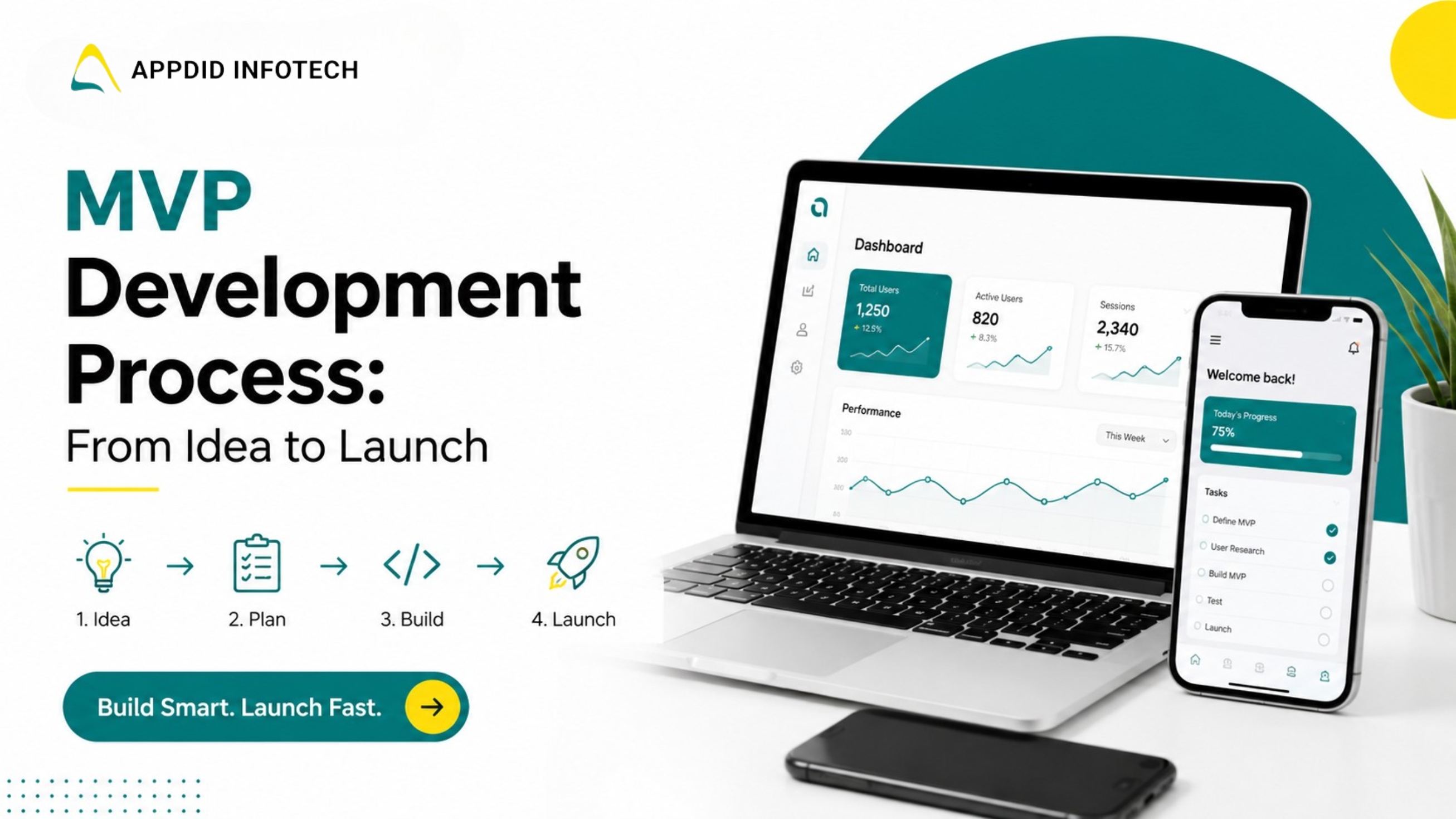
MVP Development Process: From Idea to Launch
What Is MVP Development?
The MVP development process involves creating a Minimum Viable Product (MVP) with only the essential features needed to solve a specific problem and validate a business idea. Instead of investing significant time and money into a full-scale product, startups and businesses launch an MVP to gather user feedback, test market demand, and reduce development risks.
Many successful companies such as Airbnb, Dropbox, and Uber started with a simple MVP before evolving into global platforms.
Why Is MVP Development Important?
Building a product without validating the idea can lead to wasted resources. MVP development helps businesses:
-
Validate product-market fit
-
Reduce development costs
-
Collect real user feedback
-
Attract investors and MVP funding opportunities
-
Launch products faster
-
Minimize business risks
For startups, an MVP is often the quickest way to determine whether an idea has real market potential.
MVP Development Process: Step by Step
1. Define the Problem
Every successful MVP starts with identifying a clear problem. Ask yourself:
-
What issue are users facing?
-
How will the product solve it?
-
Who is the target audience?
A clear problem statement helps keep development focused on core functionality.
2. Conduct Market Research
Before development begins, analyze competitors, customer needs, and market trends. Understanding existing solutions can help identify gaps and opportunities for innovation.
If you're planning a mobile application, reviewing resources like How to Choose the Right Mobile App Development Company can help you understand the development landscape
3. Prioritize Core Features
One of the biggest mistakes in MVP development is adding too many features.
Focus only on features required to solve the primary problem. Everything else can be added later based on user feedback.
For example:
Food Delivery MVP
-
User registration
-
Restaurant listing
-
Order placement
-
Payment integration
Features such as loyalty programs and advanced analytics can wait for future versions.
4. Create Wireframes and Prototypes
Wireframes help visualize the user journey before development starts. Prototypes allow stakeholders and potential users to provide feedback early in the process.
This step reduces costly design and development changes later.
5. Build the MVP
Once requirements are finalized, development begins. Businesses can choose between native or cross-platform technologies depending on budget, timeline, and scalability goals.
You can explore the differences in our guide on Flutter vs React Native: Which to Choose in 2025.
6. Test and Launch
Before release, perform:
-
Functional testing
-
Performance testing
-
Security testing
-
User acceptance testing
Launching with a stable product improves user trust and feedback quality.
7. Measure and Improve
After launch, monitor:
-
User engagement
-
Retention rates
-
Feature usage
-
Customer feedback
These insights help determine which features should be added, modified, or removed in future versions.
How Long Does It Take to Build an MVP?
One of the most common questions is "how long to build MVP?"
The answer depends on complexity, features, and development approach.
Typical timelines:
-
Simple MVP: 4–8 weeks
-
Medium complexity MVP: 8–12 weeks
-
Advanced MVP: 3–6 months
A focused scope helps reduce development time and accelerates market validation.
MVP Product Examples
Some well-known product MVP examples include:
Dropbox
Instead of building the entire platform first, Dropbox launched with a demonstration video to validate demand.
Airbnb
The founders initially rented out their own apartment through a simple website before expanding the platform.
Uber
Uber's first MVP only connected users with drivers in a single city.
These examples demonstrate how a minimum viable product (MVP) can validate ideas before large-scale investment.
Common MVP Development Mistakes
Avoid these common pitfalls:
-
Adding unnecessary features
-
Ignoring user feedback
-
Skipping market research
-
Choosing the wrong technology stack
-
Delaying launch while pursuing perfection
Remember, the goal of an MVP is learning, not perfection.
Conclusion
The MVP development process helps startups and businesses validate ideas, reduce risks, and launch products faster. By focusing on core functionality and real user feedback, companies can build products that solve genuine market problems while minimizing unnecessary development costs.
Whether you're building a mobile app, SaaS platform, or digital marketplace, a well-planned MVP can provide valuable insights before scaling your product.
Frequently Asked Questions
What is MVP in product development?
MVP stands for Minimum Viable Product, a version of a product that includes only essential features needed to validate an idea and gather user feedback.
Why do startups build MVPs?
Startups use MVPs to test ideas, reduce development costs, attract investors, and validate product-market fit before full-scale development.
Can an MVP help with funding?
Yes. A working MVP demonstrates market demand and user interest, making it easier to attract investors and secure MVP funding.
Appdid – Expert Mobile App Development Company
Appdid is an expert mobile app development company based in Mumbai, serving startups, SMEs, and enterprises with scalable digital solutions. From startup MVPs to enterprise mobility platforms, we help businesses transform ideas into user-focused applications.
Ready to Turn Your Mobile App Idea into Reality?
Whether you're planning a startup app, SaaS platform, or enterprise solution, Appdid can help you build and launch faster with modern technologies and proven development practices.
-
Discuss your product idea
-
Validate your concept with an MVP
-
Build scalable Android and iOS applications
-
Launch faster with expert development support
Connect with Appdid today and take the next step toward building a powerful digital product for your business.